REGENERATION

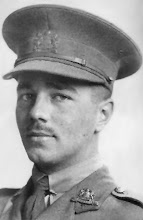
"...I believe that I may help to destroy the callous complacence with which the majority of those at home regard the continuance of agonies which they do not share, and which they have not sufficient imagination to realise."

Siegfried Sassoon - 1917

Sunday, March 7, 2010

THEME OF POWER IN ACT 2 OF DEATH AND THE MAIDEN

In Dorfman’s “Death and the Maiden”, the audience is apprised of the resonating theme of power in Act 2 of the play. The positions of, and people in power perpetually fluctuates, at one point Paulina is dominant, obstinate and in power, at another Gerardo exerts his full potential to steer the situation in a direction that suits him best and at another point, both succumb to a situation though not one as helpless as Roberto’s. Also, this reversal of roles sheds light on Paulina’s rise to power in her domestic abode and her eventual submission to her husband, Gerardo’s fall in supremacy in his own home and need to regain it, and Roberto’s emasculation due to his inability to regain strength over a woman. Therefore, through this theme of power, Dorfman also sheds light on gender and social stereotypes and the strengths and flaws of these three characters.

“I was wild and fearless”, is a quote that effectively demonstrates Paulina’s strength of character, but the past participle enables the audience to think that perhaps in her domestic life she is no longer wild and fearless but frustrated and terrified. Yet her control of the situation and her masculine prop, the gun, tells the audience that even though she may be fearful, she is still in power. However, she is only in power in this current situation, because otherwise, she has always depended on Gerardo, even after her release she went straight to him. In addition to that, Dorfman sheds light on social stereotypes wherein the woman is submissive to a man and he is in power regarding the domestic front, “Of course I’m going to listen to you, haven’t I always listened to you?”, here we can see through this rhetorical and sarcastic question that she has, indeed, no intentions of listening to her husband, but in the past she was submissive in their personal life, yet finally she is gaining some power over him.

To further demonstrate her rise to power on the domestic and personal front between her and her spouse, there is perpetual use of imperatives. Paulina’s imperative mood, “He wants water, Gerardo”, “tie him up again”, “tighter”, exhibits her neglect for stereotypical societal roles wherein the man has the authority over the woman. “But as usual, you don’t believe me”, is a phrase that indicates to the audience, that Paulina has understood her lack of ability to hold some form of superiority in their relationship and is constantly undermined, yet this one time she will strive to maintain her power of Gerardo, no matter how sturdy his attempts are to dissuade her.

However, at this point, we see the fluctuation of power, as she drops her guard considerably as she slowly loses her position of power to Gerardo’s affection. “Dear, dear Paulie, please don’t be so difficult” is what Gerardo lovingly chides and she submits to him to some extent. Yet another variation in the higher position of power results in Paulina retrieving her status as the influential one back as she begins to treat Gerardo as a child. She uses imperatives and aggressively prompts him as though she is an instructor and he is uncomfortably at her mercy to answer her, “Say it. Say it now. Tell me, tell me. And what else?”

The reason she resorts to willingly being the one who has authority and influence is because she has this innate desire to take the situation in her own hands as no one else will. She states, “Let me have my say” and “So now darling, tell me who do I go to now?” and this indicates that she may not have any power in court, but she does in the privacy and security of her own house and she refuses to be silenced any further, and her determined attitude to receive well-appointed justice enables her to be obstinate and hell-bent. Nothing will dissuade her as long as she is the significant, overriding character in the present moment, this is indicated by her repetition of “what I want”, “you know what I want?” “That’s what I want.” Her needs simply must be met and she shall not take no for an answer.

Not only is Gerardo at the receiving end of her power and potential to steer this situation in any direction she chooses, but Roberto is too, and even more severely helpless. She demonstrates her power on him as she “slowly passes her hands up and down his body”, she may have gone from being repulsed at his touch to teasing him in order to impose herself on him at her own free will. She is in an authoritative mood as she confidently cuts Roberto off and leaves him without any right to speech, and again there is use of imperatives and short sentences to impose her regulations on him, “Threatening, yes you were. Let’s get this clear. Threat time is over. Out there you bastards may still give out the orders, but in here I’m in command, now is that clear?” this aforementioned repetitive and explicit phrase signifies her potential hold over him and, to some extent, sheds light on her sadistic nature as she is in charge and enjoying it.

Also, in this act, Dorfman lays bare the contempt for stereotypical societal views that women feel. Paulina is frustrated at the fact that for the past 15 years she has not formed any bright future prospects on the professional front and is financially dependent, and all she is, is the “ideal housewife”. She vents on Roberto, not having much evidence of his guilt; she may have been financial independent were it not for her kidnapping. And while she is resenting and punishing him for it, she uses her powerful position to get away from everyday domesticity. And she also, when in power, mocks the role of women as solely ‘homemakers’, “snap your fingers and I’ll come running.”

Another, second, significant character in this Act who’s position of power perpetually fluctuates is Gerardo. Prior to this incident, we as audience are well-aware of his influential post in the truth commission. On the professional front Gerardo is a man of power, yet his position of power has gone astray in his own abode as Paulina takes matters in her own two hands. In fact, due to her misconduct and disagreement with the well-appointed ways of the court, she will be the reason being he might lose his job in the near future and this leaves him furthermore helpless.

Gerardo does, however, have every intention to forcefully impose his authority on her at every instance he gets. “I want you to…”, “I want you to…”, “Don’t interrupt”, “Shut up”. But he fruitlessly exercises his authority on her as she still persists on exerting her own authority and enforcing orders wherein he is left feeble, unaided and helpless. He succumbs restlessly to her demands.
However, he swiftly regains control and uses his affection as a tool to do so, “(Whispering to her)”, “oh my love, oh my love”.

Soon after, from the position of a feeble, unaided man who is at his wife’s disposal, he takes on the new role of interrogator. He confidently cuts of Roberto at every sentence to question him of things that he may require such as “bread”, and shows disregard for his dire predicament. Perhaps after he draws a link between Roberto quoting Nietzsche to him and Paulina, he starts to believe her and so joins her in her position of power of conveniently inflicting Roberto with misery.

Following that, Gerardo soon loses his power to Roberto; he becomes vulnerable to Roberto’s tactic of engaging his captors with unnecessary thoughts in order to free himself. He criticizes Gerardo’s masculinity and insinuates that he has been emasculated, “cut your balls off”. Gerardo inevitably gets agitated and makes an immediate attempt to regain his power by abusing Roberto and making sure that he is well aware that he has no hope without him. However, Roberto swiftly strips Gerardo of his momentary prime of power by exclaiming “Don’t go, don’t call her”. So once again Gerardo is left to be rendered not that influential, as Roberto is still at the mercy of Paulina, not Gerardo. Gerardo, on the other hand, refuses to acknowledge that and suggests that his wife is still within his control, knowing fully that she isn’t, which is why he “(sadly and bitterly)” states “who gives a fuck what she thinks…” So to further suggest that his wife is within his control, he states that he will venture to call Paulina as Roberto supposedly “needs to piss”, as Paulina previously stated, “if he wants to piss, snap your fingers and I’ll come running.” Hence, Gerardo demonstrates to Roberto that he will regain his control over his wife and yet simultaneously not abuse his control over Roberto.

Regarding Roberto, however, it is clear to the audience that Roberto is helpless through and through, especially since he is emasculated by Paulina, being tied up and subject to a woman’s threats and abuse. There are some instances where he is seemingly more empowered than Gerardo, when Paulina freely vents to Roberto it is clear to the audience that Roberto has the power to let Paulina have her say and speak freely, something she cannot do with Gerardo in their relationship. Roberto may seemingly have some bright glimpses of being set free, but he all-in-all is subject to abuse by his captor, Paulina. He does, for a few instances threaten Paulina and Gerardo to set him free, “I forbid you to…”, “what you must do is untie me immediately.” However, he is clearly in no position to make demands or impose authority.

Therefore, it is significantly demonstrated throughout the entire Act 2 that Dorfman intended to exhibit the theme of power through these three characters and how it is perpetually fluctuating in each individual case. It is through the reversal of roles that we see the characters strengths, weaknesses and get a glimpse of stereotypical societal views.


Theme of power in Act 2

Comment on the theme of power as shown in Act 2.

In Act 2, Paulina gains absolute power and authority over the situation and the people around her, Gerardo and Roberto. Throughout the act, Paulina constantly reminds Roberto of what he had (presumably) said to her during the days when she was victimized. Dorfman could have intentionally put in these lines to show the audience that Paulina there has been a role reversal here. The victimized has become the oppressor and vice versa. Also, at first, it seems that even Gerardo has no power over the situation or Paulina at all. Gerardo holds no power over the situation. However, as the act proceeds, he gradually gains more and more control.

Paulina’s total control of the situation slowly gets weakened as Gerardo gains more control. However, she still retains a lot of power as she has a weapon and doesn’t appear to be in a sound state of mind and hence threatening. This is an irony because Gerardo is supposed to be a man of great authority, chosen as a member of the ‘Truth Commission” to lead the people to uphold justice and reveal the truth and so he should have power and authority wherever he is and whatever situation he is in.

So there is a ‘transition’ of power from Paulina to Gerardo although it is insignificant and Gerardo still has very little control over the situation. This ‘transition’ can be seen from the start of the act up to page 39. Here we see Gerardo attempting to dissuade Paulina from doing anything to Roberto and just free him. The transition is shown especially from page 35 to 37 when Gerardo tries to dissuade her by talking to her privately. This seems to weaken her a little and this gives a bit more power to Gerardo.

However, on page 40, it is Gerardo and Paulina who gets convinced. On top of the page, we see Paulina mention the doctor who had torture and raped her had quoted Nietzsche before and put on music composed by Schubert. Then Gerardo repeats Nietzsche as he had heard Roberto mention Nietzsche before. This destroys any sort of power or authority Roberto has on Gerardo.
Roberto had power over Gerardo because his wife is his responsibility. Roberto had also helped him previously on the road and so the task of dissuading Paulina and persuading her to let Roberto go should be Gerardo’s. However, towards the end of the play, Roberto’s words and ridiculous assumptions, shown in this quote, “Playing roles, she’s bad, you’re good, to see if you can get me to confess that way. And once I’ve confessed, you’re the one who’s going to kill me, it’s what any man would do, any real man, if they’d raped his wife, it’s what I would do if somebody had raped my wife. Cut your balls off. So tell me: you think I’m that fucking doctor, don’t you?” causes the scale of power between Roberto and Gerardo to shift to Gerardo. What Roberto says angers Gerardo and all the frustration and stress that had been building up in Gerardo finally bursts and causes him to believe Paulina and gives him the desire to kill Roberto.

Hence, power fluctuates and shifts from one character to another, among the 3 characters we see in the act.
547 words

Friday, February 19, 2010

IBSEN'S PRESENTATION OF WOMEN IN HEDDA GABLER - ARUSHA

Comment on Ibsen’s presentation of Women in Hedda Gabler.

Hedda Gabler, a play by the highly acclaimed realist playwright Henrik Ibsen, is set in 1890 in the household of The Tesman’s.
The play sheds light on the principles and social conditions of the 1890’s (which is during the Victorian Era) and does so through the feature of three main women who are connected but come from different backgrounds and personalities. These women are Hedda Gabler, her Aunt Julle and her character foil, Thea Elvsted. Ibsen presents each of these women differently and it is clearly noted that Hedda is portrayed, to some extent, as a New Woman from a high social standing who shows disregard toward the limits that society imposes on her, yet is troubled at the thought of rebelling against social expectations and opinions. And her Aunt Julle is represented to be a middle class woman who conforms to society’s expectations and to some extent imposes them on Hedda, and Thea Elvsted is a character foil for Hedda, a mirror opposite from a lower social standing who brings out Hedda’s complex flaws and is to some extent a New Woman too.

In the first instance, it is clearly depicted to us that Hedda is a General’s daughter and hence, we are led to believe that she comes from a wealthy and elite background. Also, she is dressed elegantly, “in a tasteful, somewhat loose-fitting gown” and her figure is “aristocratic and elegant”. We also take note of the fact that she is married to a man whose family she has no respect for; perhaps because they are from a lower class, as she mistakes her husband’s aunt, Aunt Julle’s hat to be the maids and later reveals to the audience that she did so intentionally to show her aversion towards the family due to their lack of social standing. Hence, it is clear to us in the first instance that Hedda, with her “steel grey and cold” eyes, is a very detestable, unaffectionate and dispassionate person. Her unaffectionate persona is shed light on as she “offers her hand” to her husband’s Aunt, and she refuses to greet her appropriately, also we are apprised of her unaffectionate persona as she takes no interest in her husband’s love for a pair of slippers that are of sentimental value to him, “thank you, they wouldn’t appeal to me.”
She also seems to be an outcast in her own home, as she stands at the doorway to make her entrance until her husband notices her, therefore, we see that she is on the threshold of the Tesman’s familiarity, and is reluctant to enter freely.
Hence, from the above mentioned facets of Hedda’s personality, we see that she rebels in vain hope that she can express her unexpressed feelings through these hostile statements and actions and Ibsen portrays Hedda to be so, merely because he is shedding light on Class Warfare of that time.

In addition to that, Ibsen represents Hedda to have a violent, demonic and jealous facet to her personality. This is portrayed through several instances, one being her openly stating her desire to occupy herself with her “pistols” and using it to playfully threaten Mr.Brack, not only does she threaten, but gives it to Eijlert Lovborg in hope for him to end his life “beautifully” where as she cannot differentiate between death and beauty, and upon hearing about his death she doesn’t not even feign concern as she ponders over why he didn’t shoot himself in the temple out of courage. Not only did she hand him the pistol to end his life, but she has, prior to this, “threatened to shoot him”. And her manipulative, demonic aspect shines through as Thea recites the story of Eijlert’s unknown ex lover threatening to shoot him, and Hedda is “cold and collected” and immediately interrupts her, “Oh Rubbish! People don’t’ have such things here” and this indicates that not only does she lie about her being in possession of pistols, but interrupts her in addition to lying in order to shadow that perhaps she was previously involved with Eijlert and wishes to keep it a secret.
Her desire to utilize her pistols is her way to experience power and freedom, and her machinations expose the audience to her demonic and jealous nature. She offers to burn Eijlert’s and Thea’s manuscript in order to find some way to increase the chances of brighter future prospects for her husband, since he cannot make sufficient headway on his own and this doesn’t benefit her, so that leads us to believe that she is exceedingly selfish and in need of power. When she does burn the manuscript out of spite and jealousy, she exclaims “Now I’m burning your child Thea! With your curly hair! I’m burning…I’m burning your child.” The aforementioned phrase depicts a hint of violence within her, and her jealousy is depicted when she conceals an “involuntary sneer” when Thea talks of her constructive involvement in Eijlert’s life.
Not only is Hedda mildly demonic, but she is extremely manipulative, she has a pretentious friendship with Thea and forces her to into telling her every detail of her relationship with Lovborg, and she has a pretentious relationship with Lovborg, to whom she hands the weapons that he’ll use to end and ruin his life, Alcohol and a Pistol. Hedda has no concern for Thea, as she instigates Lovborg to go the party, and instigates an argument between the two, then she “passionately grips Thea in her arms” and says “I think I’ll burn your hair off after all.” Perhaps her violence and need to be in power comes from her need to find an expressive outlet and a means of being free, she longs for freedom and has all this while been exposed to being a Generals Daughter, and now has no social life nor no social standing and is limited by her position as a woman. Hence, we can see that, even though Ibsen wishes to portray Hedda as a New Woman to some extent, a woman who WISHES to push against the limits of society, she still takes no initiative steps towards her freedom because she simply CANNOT. She is depicted to be barren and sterile as she has no keen desire to expand her knowledge horizons, unlike Thea, and (this makes Thea more of a character foil of Hedda’s) she shows no interest in the manuscript. Yet she still defies a prototypical Victorian era woman who conforms to society, because she has a “lust for life” as Eijlert states. Yet she has a dread for scandals, and that is why she takes no initiative steps, and her involvement in Eijlert’s death is a scandal, and this leads to her fall in the end, her death.

Hedda is portrayed to be so because Ibsen wishes to shed light on the societal views of that point in history, Hedda’s traits and her boredom allow her to carry out her own devilish machinations because that is rebellion against the restrictions of society and because she lacks purpose and inspiration in her life, she is helpless. Yet, she wishes to be in power. She is seemingly a new woman, who scorns society and cannot change it. She is a victim of societal pressures, for example, she has no maternal instincts and feels no motherly inclination, yet she is perpetually reminded (and dreads) her pregnancy, “it’s already September…” Yet Mr.Brack insinuates that she MUST have a child by another year, “we’ll talk about it in a year’s time, at the latest.” She is also expected to have an orderly domestic and married life, yet she feels no inclination to shower her husband with love, for she feels no passion for him, and she also has interests in unfeminine domestic life (such as hobbies regarding her pistols) and this is looked down upon at that point in time. Her lack of inspiration allows for the sadistic in her to appear, and for her to gain importance and power. However, her own machinations have their consequence and soon Mr.Brack has power over her, “Dearest Hedda, believe me, I shall not abuse the position” yet the very idea that she is subject to his whims and fancies, “Brack stands over her, leaning against the armchair”, makes her despise him for taking her freedom away because she loves it too much, and hence, this results in her death. Mostly because she has nothing left, even her husband has moved on to Thea. Thea is perhaps the only one who in the end receives it all. She is a character foil to Hedda, someone who is a new woman to some extent, but doesn’t desire for the kind of freedom Hedda does, she is independent, has a keen interest in expanding her educational horizons, and yet is dependent on a man and much more subtle than Hedda. She conforms to society and to some extent, much like Hedda, is concerned about society’s thoughts and opinions. However, even though she seems impressionable and docile, and is a character foil to Hedda, the end result is that she receives everything and is thereafter rendered, conniving and influential.

Therefore, we can conclude that the women present in Henrik Ibsen’s “Hedda Gabler”, are made to represent in some form, society and its pressures and are indeed, different to each other yet share some similarities.

Tuesday, December 15, 2009

Attention TRUC, DANIEL and VINCENT...

I am still waiting for your response to the statement; 'a thousand years will pass and the guilt of Germany will not be erased.'

Thursday, December 3, 2009

National Guilt - Hans Frank Quote Response

“A thousand years will pass and the guilt of Germany will not be erased.”

This quote revolves around the national guilt of the German people during World War 2 and their crimes committed by Hitler’s Germany. It was said by Hans Frank, a former Nazi governor of Poland. In some aspects, I do agree with the statement above. However, there are other areas in which I disagree that the guilt of Germany will not be erased.

I strongly believe that future generations after WW2 will still feel that they are responsible for the crimes committed by Hitler’s Germany. They feel as if they cannot wash the blood off their hands. In an article, Bernard Schlink (author of ‘The Reader’) pointed out that “Children inevitably share some of that guilt...Not because they were directly involved but their parents, teachers and those they look up to as people of admiration may have had a concealed past.” If a child was suddenly told that his or her father was involved in the holocaust and slaughtered many lives, the child would be full of regret and would immediately feel the desire to re-pay the debts his or her father had caused to the Jews. In essence, I believe that the guilt would not fade away. By having this guilt and remorse created by future generations, it makes them pay homage to the victims of the Holocaust, acknowledging that Jews were a serious victim of torture, torment and slaughter. In this way, Jews who were involved in the Holocaust and the children of the victims are able to be at peace and gain respect and acknowledgement from the outside world. Although victims of the Holocaust may never forgive Germany for exposing them to genocide, they know that Germany acknowledges that they are guilty and as long as history stands, they will always feel regret and do not wish to impose any prolonging threats against the Jews made by their ancestors.

However, society, as a whole, should move onward and need not remind themselves about the atrocities of WW2 and the Nazi’s whenever they hear the word “German” or “Germany” in the next thousand years. There are those who have become ashamed of calling themselves “German” because of WW2. It is true that one must recount history, learning about mistakes in the past to advance and learn for the future. But it does not need to be exaggerated like Frank’s quote. The Crusades between the Christians and Muslims occurred roughly a thousand years ago, yet no strong collective guilt is felt between Christians today. There are no memorials to celebrate the end of the Crusades, neither are there any emphatic gestures of apology today. In a thousand years time, would the same occur for the Holocaust? Would people forget about the atrocities although it has been engraved in the sandstones of history? Although I strongly believe that the victims of the Holocaust should be remembered, we cannot guarantee that the collective guilt of Germans will never be erased.

I do believe that the guilt caused by the Nazis of those who were not involved will be difficult to erase. But as history has told us with the Crusades, this “guilt” defined by Frank may not last for a thousand years. It could fade away as time burries the events of the past. This guilt felt by Germans who were not involved in WW2 should not be taken lightly. 11 million to 17 million of Jews were slaughtered for no definite reason. This guilt should last as a reminder and a gesture remembrance to the countless victims killed during the Holocaust.

Wednesday, December 2, 2009

HANS FRANK QUOTATION - My response, By Arusha.

Hans Frank, the Nazi governor of Poland, stated right after the Nuremberg trials that “A thousand years will pass and the guilt of Germany will not be erased”
The aforementioned quote was said during a time of immense feelings of guilt, remorse, despondency. At this point, it was an intense time, Hans Frank seemed to have honestly uttered this statement, however, that is arguable.

I would agree with Hans Frank’s statement, I believe that the guilt of the Nazi’s is a collective guilt felt by the people of Germany. I say so for the mere reason that those who were NOT directly involved (or were not harmed) were therefore, not involved and by not involving themselves, they looked on while history was unfolding before them. Therefore, the generation of that particular time felt guilt and remorse collectively for having not extending themselves in a time of need. The people directly involved, on the other hand, would most definitely feel guilt because it is clearly established that what the Nazi’s did was unforgivable, and therefore no significant amount of time would erase their act. And since their act can never be erased effectively enough, the children of the following generations will reside under the shadow of the past, as Bernhard Schlink also makes clear in his novel “The Reader”.

The reason that Hans Frank feels as though an exceedingly large number of years could never diminish the resentment and guilt felt by those who were, in fact, not the direct perpetrators of the heinous crime committed an age ago, is because the 1st generation to follow the war, are the children of either the perpetrators, the onlookers, or the harmed. The children of the perpetrators would feel guilt for ever having loved those, for ever having admire those that turned out to be involved in such a monstrous crime, and even though they were previously oblivious to it, they would still feel the guilt when it’s a matter of coming to terms with redefining their relationship with their loved ones and feeling a sense of disappointment and disgust at having been loved by the person who could carry out such terrible tasks. The children of the on-lookers were inclusive of those to feel the guilt in years to come due to the fact that they also must redefine their relationship with their loved ones. They must do so because, as time progressed and so did their education and awareness, they realized the true magnitude of destruction caused, and wish to understand why the acts didn’t come to end when they could have, hence they feel as though the guilt rests upon them because they are the ones involved with those who were involved, they must learn to live with the thoughts that those they respected, turned out to be coldhearted enough to ignore their surroundings when the situation worsened. The children of those harmed of course, just feel guilt for ever having been part of a country that so conveniently banished them, therefore, they feel guilt alongside disgust and grief.

Perhaps we can say that the quote was exaggerated, even though I agree with it, I wouldn’t entirely state that a thousand years would diminish the guilt felt by the oncoming generations, but the 4th-5th generation would be much less under the shadow of guilt, much less than the 1st and 2nd generation, where there are personal links and the shock of coming to terms with the situation is intense.

Monday, November 30, 2009

For Thursday 3rd December

Write 500 words expressing your response to the statement: "A thousand years will pass and the guilt of Germany will not be erased”

Thursday, November 26, 2009

Vincent's response to the use of Prolepsis in Atonement.

“Briony was hardly to know it then, but this was the project’s highest point of fulfillment”

This is a short but significant prolepsis because it shows the reader Briony’s role in the novel. Firstly, the author suggests to the reader that the play that Briony made, which is seen as very childish would be the best thing Briony would achieve throughout the whole novel. This would make us think about why and how Briony wouldn’t be able to achieve anything else better than just a play, perhaps she will do something bad that would make the reader loose sympathy for her, or her character is simply boring and monotonous.

Furthermore, this quote also creates an emphasis on how important the play would be and how it would contribute a lot to the novel, because the play reflects on Briony’s character and on how she sees everything in black and white. Perhaps this would be bad later on in the story, for example when she sees Robbie and Cecilia by the fountain or when the blamed Robbie for the rape just because she saw him as a bad guy from a fairy tale.