Wednesday, September 30, 2009
Social traditional barriers eradicated during WW1
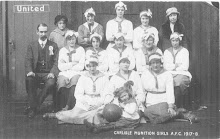
Pat Barker expresses her thoughts and views about the social barriers, women especially, during the period of World War I through ‘Regeneration’. When the war broke out, all men (including young adults, males who are above the age of 18) were forced to join the army without questions. Their families, women, and children were not ready to let these men go but they had to. Therefore, the work that used to keep these men occupied was not running properly because there were no men working. Women came into the minds of the government, because they were the only one left. They were the last options. “middle-aged or elderly men, and women” – Pat Barker lists out the lucky ones who were allowed to stay back and avoid going to the war. The war, for the men was a tragedy and a destruction, that they had to face uncountable number of sicknesses and diseases, watching their mates’ deaths, living in the worst conditions that they could ever lived in. While for the women, the war, at first it was not an easy thing to leave these men, but then they were the only one left, they experienced freedom and liberation that they have never experienced before; raising their families on their own, being able to hang out with their friends, work in factories. These new freedoms made the women began to feel the power that they were getting, that they could live on their own and being responsible for their own lives. All through the novel ‘Regeneration’, we begin to see that women became more ‘manly’ in some ways, such as the way they talk, the language, and the way they act. “Raucous laughter”, “Eeh, I hope a man never tries to shove anything up her flue”, and “arseholes” are examples from the novel that show that the women had become stronger and more confident in their behaviours, mostly for the lower/working class women. The women’s advancements required time for them to adjust to their new rules and jobs, their new lives. “pulling”, “dragging”, and “donning” – these three words emphasise the idea that women are taking over the men’s roles in the society. Women are in charged of important meetings, jobs and also family-caring. The work they were getting used to was “even jolly for a time” – this proves that the women were enjoying their evolvement of roles in the society. The phrase “a group of women, thirty or forty perhaps sitting on the next table” that Pat Barker uses, lets us as the readers know that not only working-class-aged women were enjoying their freedom, but women of all ages were taking pleasure in this new change in roles in the society. “Subdued, they hadn’t yet managed to adjust” – all these new changes happened too quickly for the women to grab a hold of it, but no matter what they would fight for their freedom and independence. They were allowed to go to “men’s” places, ordering food not just cooking for them at home, being normal housewives, they were socializing, something so new that they have never experienced before. “Lizzy was keeping these young girls entertained…” – this tells us that women began to have stories to tell, knowing funnier and amusing things, and began to feel more freely and confident about themselves. Before the war women were seen as the lower sex, but when the war broke out, women gained their power and freedom. “She held her hand out to him in a direct way…” – women began to gain more confidence from taking over the men’s roles, while the men were losing their confidence. Men were emasculated, losing the male characteristics and being ashamed of them. Men were being injured, shot, and even for some men, who were facing difficulties doing normal things others can do such as walking or seeing, were seen as cowards and they have to live lives which they thought those were “half-lives”. It was not so easy for the men after the war, expecting their women to stay home and cook, looking after the kids, but everything was the opposite. The women were now working, making and spending their own money, and probably for some they were looking down to the men. Everything became the opposite for the men after the war. Destruction became disappointment.

Monday, September 28, 2009
Eradication of Social Barriers in the course of WW1
‘To what extent does Barker suggest that traditional social barriers have been expanded or eradicated during the course of WWI?’
Throughout the novel, Barker gives many points suggesting the traditional social barriers have expanded and also eradicated during the course of World War One. She shows these points by writing on topics such as emasculation, the role of Women during the war, their changed attitudes and freedom.
Firstly, she approaches emasculation to suggest the eradication of the traditional social barriers. Soldiers who were traumatized in the war were sent back for treatment and they were emasculated because they didn’t follow the ideals of a man at that time. Men who succumbed to their fear and broke down were seen as cowards and deserters. The ideals of a man were to be brave and restrain the show of emotions or sentiments because they were seen unfit for men. It was exceptionally emasculating to cry and many men who were sent to Craiglockhart War Hospital did cry. They had extremely traumatizing war experiences which were beyond their abilities of restrain. To show fear of anything at all was considered cowardice and men were expected to be unafraid, including horrific war experiences. One example from the book is Anderson, who had developed a phobia of blood from a traumatic war experience. He was a surgeon in the front and there he had treated a French soldier who was covered in mud and couldn’t speak a word of English. The problem was that even after Anderson treated all the visible wounds which weren’t all that visible thanks to the mud, there was a bigger wound covered up by the mud. Hence the soldier hemorrhaged and Anderson had to watch him bleed to death. This particular experience completely emasculated Anderson. He even had an emasculating dream about him being naked then wearing a corset, which only women wore to look more attractive. In the dream, he remembers wearing his uniform, which would represent a man’s pride and then he is naked which show that his pride has been stripped off of him. Here Barker uses symbolization to describe the emasculation of Anderson.
Secondly, Barker uses the role of women, their changed attitudes and their independence to show traditional social barriers disappearing. Women both lost and benefited from the war. They lost their precious husbands and sons but they got much more freedom and independence. All the men were in France but the factories had to keep running and the empty places left by the men had to be replaced by the women. Hence women now had better paying jobs. This also affected them so that they gained masculine traits. There are many examples in the book. Firstly, Prior, a character in the novel finds a group of women sitting in the café. This would not have been a common sight before the war. They were also not of the same age; 3 of them were younger than the other, Lizzie. They were all brought together by the war. They were talking and laughing loudly which was considered unacceptable prior to the war. Even the topic of their conversation was sexual, which would have been a very shameful topic to talk about in public for women prior to the war. The oldest one of the group, Lizzie, is entertaining the other girls with stories of sexual content with usage of vulgar language. This shows that women picked up masculine traits. Their language is also clearly uneducated. They also appear to be a little drunk and display undignified behavior. We also see that Sarah approaches Prior first which was very unlikely and she also “held out her hand to him in a direct, boyish way..” which shows that she is not behaving the way women did before the war. Sarah also “knocked them back” where “them” would refer to the drink she ordered/ this shows us how the women are free to drink alcohol. Here masculine characteristics are displayed again. Also, in the book there is a part which says “They seemed to have changed so much during the war, to have expanded in all kinds of ways, whereas men over the same period had shrunk into a smaller and smaller space.”, where the “They” refers to women. This shows us that while men are losing their confidence, women are gaining it. As the book progresses we can find more points to show the changing attitudes and increasing freedom for women. In the later part, we can find words such as “overalls”, ”cigarette” and ”sweat” which were uncommon among women in the previous to the war. They also use vulgar language frequently with examples such as “arseholes” and “bugger” and they also openly discuss the subject of homosexuality which would be a taboo topic and the way they speak display a lack of respect for men.
Hence, Barker suggests that social barriers had been eradicated during the course of World War One to a large extent and she shows many examples to support it. Throughout the war, women gained more and more masculine traits and also gained confidence while men lost their confidence.
Throughout the novel, Barker gives many points suggesting the traditional social barriers have expanded and also eradicated during the course of World War One. She shows these points by writing on topics such as emasculation, the role of Women during the war, their changed attitudes and freedom.
Firstly, she approaches emasculation to suggest the eradication of the traditional social barriers. Soldiers who were traumatized in the war were sent back for treatment and they were emasculated because they didn’t follow the ideals of a man at that time. Men who succumbed to their fear and broke down were seen as cowards and deserters. The ideals of a man were to be brave and restrain the show of emotions or sentiments because they were seen unfit for men. It was exceptionally emasculating to cry and many men who were sent to Craiglockhart War Hospital did cry. They had extremely traumatizing war experiences which were beyond their abilities of restrain. To show fear of anything at all was considered cowardice and men were expected to be unafraid, including horrific war experiences. One example from the book is Anderson, who had developed a phobia of blood from a traumatic war experience. He was a surgeon in the front and there he had treated a French soldier who was covered in mud and couldn’t speak a word of English. The problem was that even after Anderson treated all the visible wounds which weren’t all that visible thanks to the mud, there was a bigger wound covered up by the mud. Hence the soldier hemorrhaged and Anderson had to watch him bleed to death. This particular experience completely emasculated Anderson. He even had an emasculating dream about him being naked then wearing a corset, which only women wore to look more attractive. In the dream, he remembers wearing his uniform, which would represent a man’s pride and then he is naked which show that his pride has been stripped off of him. Here Barker uses symbolization to describe the emasculation of Anderson.
Secondly, Barker uses the role of women, their changed attitudes and their independence to show traditional social barriers disappearing. Women both lost and benefited from the war. They lost their precious husbands and sons but they got much more freedom and independence. All the men were in France but the factories had to keep running and the empty places left by the men had to be replaced by the women. Hence women now had better paying jobs. This also affected them so that they gained masculine traits. There are many examples in the book. Firstly, Prior, a character in the novel finds a group of women sitting in the café. This would not have been a common sight before the war. They were also not of the same age; 3 of them were younger than the other, Lizzie. They were all brought together by the war. They were talking and laughing loudly which was considered unacceptable prior to the war. Even the topic of their conversation was sexual, which would have been a very shameful topic to talk about in public for women prior to the war. The oldest one of the group, Lizzie, is entertaining the other girls with stories of sexual content with usage of vulgar language. This shows that women picked up masculine traits. Their language is also clearly uneducated. They also appear to be a little drunk and display undignified behavior. We also see that Sarah approaches Prior first which was very unlikely and she also “held out her hand to him in a direct, boyish way..” which shows that she is not behaving the way women did before the war. Sarah also “knocked them back” where “them” would refer to the drink she ordered/ this shows us how the women are free to drink alcohol. Here masculine characteristics are displayed again. Also, in the book there is a part which says “They seemed to have changed so much during the war, to have expanded in all kinds of ways, whereas men over the same period had shrunk into a smaller and smaller space.”, where the “They” refers to women. This shows us that while men are losing their confidence, women are gaining it. As the book progresses we can find more points to show the changing attitudes and increasing freedom for women. In the later part, we can find words such as “overalls”, ”cigarette” and ”sweat” which were uncommon among women in the previous to the war. They also use vulgar language frequently with examples such as “arseholes” and “bugger” and they also openly discuss the subject of homosexuality which would be a taboo topic and the way they speak display a lack of respect for men.
Hence, Barker suggests that social barriers had been eradicated during the course of World War One to a large extent and she shows many examples to support it. Throughout the war, women gained more and more masculine traits and also gained confidence while men lost their confidence.
Friday, September 25, 2009
Greek Involvement in WW2
Greece Involvement in WW2
Greece was involved in WW2 from October 28th 1940. That was when Italy invaded Greece from the state of Albania. Fortunately, Italy got pushed out of Greece back into Albania. This defeat of the Axis Powers forced Hitler to mobolise his German troops into Greece on April 1941. There was a great battle, to control the Greek forces which took six weeks and delayed the German invasion of the USSR. Some historians considered this the turning point of WW2 because this brought a winter state of battle for the German troops when against USSR which the German troops was not adapted to.
The German invasion of Greece was quick. However the Greek forces resisted on the island of Crete with immense force that caused Fallschirmjäger the elite German battalion the casualties of nearly 7,000 men. These heavy losses eradicated the hope of a successful and massive airborne invasion of the USSR and further expansion in the Mediterranean saving Malta Gibraltar Cyprus and the Suez Canal from other airborne invasions.
After the occupation of the Axis Powers, when they thought Greece was under their control a large scale resistance movement developed in the country. The resistance movement tied down large numbers of Axis divisions. However, due to political tension between the resistance groups, a civil conflict amongst them arose in late 1943 until the spring of 1944.
The exiled Greek government contributed greatly to theWW2. They formed their own military forces and fought alongside the British forces in the Middle East, North Africa and Italy. The Greek Merchant navies supplied the Allied forces with war merchandise.
Mainland Greece was liberated by the occupation of Germany when German forces withdrew after facing the advancing Red Army in October 1944. German garrisons still continued to hold out in the Aegean Islands until after the war ended. The country was overwhelmed by war and the harsh treatment during the occupation of Germany. Its economy became hyper inflated and many buildings and homes were left in ruin. Greece suffered the casualties of 300 000 men during the occupation and the Jewish minority was almost completely exterminated in the Holocaust. The civil war between the British and American-sponsored conservative government and communist guerrillas followed soon after.
The Greek contribution towards resisting the German troops in the islands of Crete delayed the German invasion of the USSR which allowed a winter state of Battle which gave the USSR a high advantage. Furthermore the fierce Greek forces made the Fallschirmjäger suffer the casualties of 7,000 men. This was extremely successful because this was the elite German battalion that was a part of a massive airborne invasion of the USSR. Many historians still believe that the source of the turnover in WW2 was due to Greek contribution. On top of that the Greek forces also contributed by resisting the Axis power and having an exiled Greek government that fought with the British Army in North Africa, Italy and Middle East. The same exiled Greek government supplied the allied powers with war merchandise as well.
Sho Suzuki and Daniel Lee
Greece was involved in WW2 from October 28th 1940. That was when Italy invaded Greece from the state of Albania. Fortunately, Italy got pushed out of Greece back into Albania. This defeat of the Axis Powers forced Hitler to mobolise his German troops into Greece on April 1941. There was a great battle, to control the Greek forces which took six weeks and delayed the German invasion of the USSR. Some historians considered this the turning point of WW2 because this brought a winter state of battle for the German troops when against USSR which the German troops was not adapted to.
The German invasion of Greece was quick. However the Greek forces resisted on the island of Crete with immense force that caused Fallschirmjäger the elite German battalion the casualties of nearly 7,000 men. These heavy losses eradicated the hope of a successful and massive airborne invasion of the USSR and further expansion in the Mediterranean saving Malta Gibraltar Cyprus and the Suez Canal from other airborne invasions.
After the occupation of the Axis Powers, when they thought Greece was under their control a large scale resistance movement developed in the country. The resistance movement tied down large numbers of Axis divisions. However, due to political tension between the resistance groups, a civil conflict amongst them arose in late 1943 until the spring of 1944.
The exiled Greek government contributed greatly to theWW2. They formed their own military forces and fought alongside the British forces in the Middle East, North Africa and Italy. The Greek Merchant navies supplied the Allied forces with war merchandise.
Mainland Greece was liberated by the occupation of Germany when German forces withdrew after facing the advancing Red Army in October 1944. German garrisons still continued to hold out in the Aegean Islands until after the war ended. The country was overwhelmed by war and the harsh treatment during the occupation of Germany. Its economy became hyper inflated and many buildings and homes were left in ruin. Greece suffered the casualties of 300 000 men during the occupation and the Jewish minority was almost completely exterminated in the Holocaust. The civil war between the British and American-sponsored conservative government and communist guerrillas followed soon after.
The Greek contribution towards resisting the German troops in the islands of Crete delayed the German invasion of the USSR which allowed a winter state of Battle which gave the USSR a high advantage. Furthermore the fierce Greek forces made the Fallschirmjäger suffer the casualties of 7,000 men. This was extremely successful because this was the elite German battalion that was a part of a massive airborne invasion of the USSR. Many historians still believe that the source of the turnover in WW2 was due to Greek contribution. On top of that the Greek forces also contributed by resisting the Axis power and having an exiled Greek government that fought with the British Army in North Africa, Italy and Middle East. The same exiled Greek government supplied the allied powers with war merchandise as well.
Sho Suzuki and Daniel Lee
Saturday, September 19, 2009
Social traditional barriers eradicated during WW1
In “Regeneration”, the reader will come across three very prevalent themes that are associated with expansion and eradication of traditional social barriers in the midst of World War 1. The three themes are Emasculation, Women’s Roles and Sexual Independence. During The Great War, the views, situations and roles had changed. When war broke out, women may not have been ebullient to send their beloved sons and husbands to war, but in a peculiar way, they were content with the war because they experienced a liberation they never experienced before, they were now the only people left to run factories, and they were responsible for their own lives and this made them feel powerful and this also instilled male characteristics in them, mostly in the lower/working class. So even though war brought death and destruction for men, it brought about liberation for women. We begin to see that women evolved in such a way because they didn’t want to go back to being submissive wives, they wouldn’t let their freedom be taken away so conveniently. Women slowly realized that they could establish their own life single-handedly outside of their home-makers role, “six days a week, but she liked to work.” And Barker sheds light on this through the following, “The smell of steak frying reminded him of home….” Here we see that Barker first establishes how the women were meant to behave in a traditional manner, but to follow that up, Barker uses Prior to go into a pub and chance upon a few middle aged and older women sitting there. And here Barker uses the phrase “a group of women, thirty or forty perhaps sitting on the next table. “ So here we see that FIRST Barker states clearly the expected role of women, but war brought about change and unexpected joy for women and hence, one would know find a traditional social barrier eradicated. It is eradicated because Barker sheds light on the fact that these women are now finally going out, and they aren’t just cooking for themselves, they are ordering food and socializing in a ‘mans’ place. And not only are these women young, but this war has united all women from all ages. The phrase “Lizzy was keeping these young girls entertained…” further emphasizes the fact that, prior to the war, these women were walking cardboard boxes with no experiences of their own, but now they had stories to tell, they had personalities to exuberate and they had responsibilities of their own. Also, traditional barriers to equality between the two sexes was eradicated, “She held her hand out to him in a direct way…” the aforementioned phrase sheds light on how women are now, during the war, perceived as no longer the lower sex and are now behaving openly in more boyish manners. In fact, almost everywhere one went, they were seeing how women were growing in confidence, women go out and “burst out into minor explosions of giggles” and have fun and they fall “in with the other girls” because, now society lacks the male presence and women have taken over every aspect of life back home. Although they aren’t fully adjusted to it, “Subdued, they hadn’t yet managed to adjust”, but they won’t give it up no matter, because even if they are working hard, they “appear to be jolly” even if they are in bad working conditions. Also, Barker uses Sarah and her girls to discuss Betty’s alleged abortion and this sheds light on how traditional social ideologies have been eradicated and in place of them, women push aside the idea of “the sole purpose of life being the need to reproduce” but rather, being open to abortion and contraceptives because this new role to them was much more exciting than being a ‘home-maker’ again. Also, not only did women become overly confident, they also indulged in open discussions about sex and were sexually independent. Something they wouldn’t have been prior to the war, Barker uses Sarah to emphasize on how women were approaching men openly and were being flirtacious and drinking one drink after the other. Also, they were openly discussing sex lives and indulging in vulgar, coarse, brash and sexual discussions, “arseholes, bugger”, “he went to the club”, even homosexuality which was taboo to discuss, was openly debated. And this sexual liberation sheds light on how they’ve lost their respect for men. “Raucous laughter” is a phrase that Barker uses to suggest the type of masculinity and vulgarity that encapsulates these women and how they have become, contrary to what pre-war society wanted them to be, sexual and otherwise independent.
Thursday, September 17, 2009
Task Two - For Thursday 27th September
Look closely at pages 55-58 and comment on Barker's portrayal of Mr Prior, father of Billy Prior.
- In what ways does he demonstrate patriarchal views? (Vincent)
- How does Rivers respond to him in this extract? (Daniel)
- How does Billy's mother justify her husband's attitude on p.58 (Truc)
- How does Barker use Prior to explore her theme of patriarchal duty in the novel? (Adam)
- How does Rivers fulfil the role of Patriarch in the novel? (Arusha)
Tuesday, September 15, 2009
Homework Task
Complete an essay (700 – 1000 words):
‘To what extent does Barker suggest that traditional social barriers have been expanded or eradicated during the course of WWI?’
In your response, you should consider the following:
‘To what extent does Barker suggest that traditional social barriers have been expanded or eradicated during the course of WWI?’
In your response, you should consider the following:
- Barker’s presentation of the role of women
- Changing attitudes to sex and sexuality
- The literary devices Barker uses (eg characterisation, narrative, imagery and symbolism, language and style)
Women and Sexuality in Regeneration
On the role of women in her books Barker states that "In a lot of books about war by men the women are totally silenced. The men go off and fight and the women stay at home and cry basically, this is the typical feature. And the women in the trilogy [of which 'Regeneration' is the first novel] are always deeply significant, and whatever they say in whatever language they say it in, it is always meant to be listened to very carefully." Barker points out that the women in the munitions factories were expected to produce weapons to kill thousands, but a woman who attempts to abort her unborn child is criticised.
Notes from 15/09/09
3 young, one older—different groups brought together by war experience.
‘Munitionettes’—paper has coined a phrase for them, mocking?
Lizzie—entertaining the girls with stories, particularly sexual and bawdy content, innuendo, vulgar and course language. Language is clearly uneducated (social class).
“Let him have what he wants”—sexual freedom. Emphasis on Let him have emphasises that the women are in control.
Sarah makes the first move—she approaches Prior; uncommon in society prior to the war.
Behaviour is unlike traditional behaviour, the girls are slightly drunk (?), Sarah is flirtatious and displays undignified behaviour.
Women enjoying their freedom “…minor explosions of giggles…”.
‘Pubs round here don’t let women in’ show that limitations to the women’s freedom still lingers. Social expectations—men take prostitutes to hotels for the night but Sarah seems keen to go with Prior alone.
“She burst out laughing” – shows a fun, strong character.
“She held out her hand to him in a direct, boyish way…” Confidence, usage of male traits.
“…she knocked them back…” freedom of women to consume alcohol freely. Masculine traits again displayed.
Sarah enjoys her work despite long hours, enjoying the money and independence. “Twelve hours a day, six days a week, but she liked the work.”
Men losing their confidence as women develop theirs. “They [women] seemed to have changed so much during the war, to have expanded in all kinds of ways, whereas men over the same period had shrunk into a smaller and smaller space.”
EXTRACT 2 p.199-202
“She’s great fun” –portrays the women differently from the traditional view of women, who are supposed to bear children and care for the husbands.
“She fell in with the other girls” relates to the male environment of a factory yet the society lacks male presence.
“…hadn’t yet managed to adjust.” The women are still adapting to their new roles in societies. “Subdued” suggests that it is still an unusual situation for them.
Masculine behaviour/imagery—“overalls”, “dragging at a cigarette”, “sweat”.
“women appeared…jolly…” emphasis on fun, laughter.
Vulgar, sexual language “…arseholes…bugger…” Homosexual relationships—previously a taboo subject is now openly discussed by the girls, sexual liberation. Displays a lack of respect for men?
“Raucous laughter”—dirty jokes, very masculine.
Betty, attempted abortion. Conflict between traditional view that women breed, and new independence-women work.
Notes from 15/09/09
Attitudes towards women and sexuality
EXTRACT 1 p.87—90
Traditional views of women “…the smell of steak frying reminded him of home”. When Prior left for the war, women would still have been behaving in a traditional manner. Barker uses the image of domesticity to link women to the home.
3 young, one older—different groups brought together by war experience.
‘Munitionettes’—paper has coined a phrase for them, mocking?
Lizzie—entertaining the girls with stories, particularly sexual and bawdy content, innuendo, vulgar and course language. Language is clearly uneducated (social class).
“Let him have what he wants”—sexual freedom. Emphasis on Let him have emphasises that the women are in control.
Sarah makes the first move—she approaches Prior; uncommon in society prior to the war.
Behaviour is unlike traditional behaviour, the girls are slightly drunk (?), Sarah is flirtatious and displays undignified behaviour.
Women enjoying their freedom “…minor explosions of giggles…”.
‘Pubs round here don’t let women in’ show that limitations to the women’s freedom still lingers. Social expectations—men take prostitutes to hotels for the night but Sarah seems keen to go with Prior alone.
“She burst out laughing” – shows a fun, strong character.
“She held out her hand to him in a direct, boyish way…” Confidence, usage of male traits.
“…she knocked them back…” freedom of women to consume alcohol freely. Masculine traits again displayed.
Sarah enjoys her work despite long hours, enjoying the money and independence. “Twelve hours a day, six days a week, but she liked the work.”
Men losing their confidence as women develop theirs. “They [women] seemed to have changed so much during the war, to have expanded in all kinds of ways, whereas men over the same period had shrunk into a smaller and smaller space.”
EXTRACT 2 p.199-202
“She’s great fun” –portrays the women differently from the traditional view of women, who are supposed to bear children and care for the husbands.
“She fell in with the other girls” relates to the male environment of a factory yet the society lacks male presence.
“…hadn’t yet managed to adjust.” The women are still adapting to their new roles in societies. “Subdued” suggests that it is still an unusual situation for them.
Masculine behaviour/imagery—“overalls”, “dragging at a cigarette”, “sweat”.
“women appeared…jolly…” emphasis on fun, laughter.
Vulgar, sexual language “…arseholes…bugger…” Homosexual relationships—previously a taboo subject is now openly discussed by the girls, sexual liberation. Displays a lack of respect for men?
“Raucous laughter”—dirty jokes, very masculine.
Betty, attempted abortion. Conflict between traditional view that women breed, and new independence-women work.
Monday, September 14, 2009
Class and Social Division - By Arusha
Barker puts across her viewpoint of how savage the social system is in this dialogue-heavy novel through the characters of Rivers, Sassoon and Prior. Themes of masculinity and emasculation are present, and readers see how a break down can lead to emasculation. As Barker states early on in the novel, “they were trained to identify emotional repression as the essence of manliness”. Not only do men get emasculated due to their break down, but they are also looked down upon by the rest of society. Besides being treated indifferently due to break downs, they were “hiding” if they were physically injured, as Sarah states when she walked into a room full of despondent men who were physically injured, “They stared at her, this was a totally blank stare, it contained fear. Fear of her looking at the empty trouser legs, fear of her not looking at them.” Barker presents the way in which men were regarded if they lost a limb and how the rest of society, mostly referring to women, would feel about them. It was a given that these men were to face atrocities and if they came out the other end broken, then they were rejected. In Priors case, his family looked down upon him with no pride because Prior came back a broken man, his father previously stated “I’m not proud”. We see that, through Prior, Barker insinuated that no matter how hard a man tried to be courageous, such acts of atrocities committed would ALWAYS wound a man, but apparently society expected more of them. These social divisions began to seem futile and inexplicable, because those that judge the wounded had not experienced the catastrophe themselves.
Also, Sarah has her mother visit her, and she states, “you have to admit, some of the ladies you work with, are rough.” Ada is of low social standard but her standards in people are high, she acts above her social standing and denies her daughter the right to get involved with a man such as prior who is a broken man and also an officer, “I suppose you let him in, they like it dished out for free, learn to keep your knees together.”
Class division is prevalent throughout the novel and is discussed between Rivers and his patients and also later during the course of the novel. During the time of The War, the class system hierarchy was rigid. Hence, not only did people face class divisions on a daily basis, but even in the midst of war. This is made evident through Rivers conversation with Prior one afternoon. Rivers tries to address the situation of snobbery that Prior was likely to face whilst in France. The phrase “Prior stared intently at Rivers” is used, and here we see that the language shows the extent of bitterness in Priors tone at the thought of having to talk about the class division. Prior talks of what the right shirt is to wear, and starts to aim insults at Rivers because even Rivers isn’t wearing the right shirt, apparently the right shirt is “a deep shade of khaki” of which neither of them are wearing, When Rivers questions if Prior fits in, Priors “face shut tight”, hence we derive that he wasn’t happy with this question because he came from a lower social standing. “it helps if you went to a good school, it helps what you wear, it helps what you eat”, the aforementioned phrase is repetitive and exhibits Priors anger toward the unnecessary existence of the class system. It is through Prior that Barker expresses dislike for the system throughout the harsh times of The Great War. There is a noticeable use of symbolism, there is a central motif of silence, so when Prior suffers from Mutism, the readers are positioned to see that the reason he does is because being in the lower class doesn’t enable you to voice your opinions because you will either be shot or silenced, hence when you can’t express your thoughts/emotions which are provocative, you do tend to have a psychological conflict and it is from this that Mutism sprouts.
Also, Sarah has her mother visit her, and she states, “you have to admit, some of the ladies you work with, are rough.” Ada is of low social standard but her standards in people are high, she acts above her social standing and denies her daughter the right to get involved with a man such as prior who is a broken man and also an officer, “I suppose you let him in, they like it dished out for free, learn to keep your knees together.”
Class division is prevalent throughout the novel and is discussed between Rivers and his patients and also later during the course of the novel. During the time of The War, the class system hierarchy was rigid. Hence, not only did people face class divisions on a daily basis, but even in the midst of war. This is made evident through Rivers conversation with Prior one afternoon. Rivers tries to address the situation of snobbery that Prior was likely to face whilst in France. The phrase “Prior stared intently at Rivers” is used, and here we see that the language shows the extent of bitterness in Priors tone at the thought of having to talk about the class division. Prior talks of what the right shirt is to wear, and starts to aim insults at Rivers because even Rivers isn’t wearing the right shirt, apparently the right shirt is “a deep shade of khaki” of which neither of them are wearing, When Rivers questions if Prior fits in, Priors “face shut tight”, hence we derive that he wasn’t happy with this question because he came from a lower social standing. “it helps if you went to a good school, it helps what you wear, it helps what you eat”, the aforementioned phrase is repetitive and exhibits Priors anger toward the unnecessary existence of the class system. It is through Prior that Barker expresses dislike for the system throughout the harsh times of The Great War. There is a noticeable use of symbolism, there is a central motif of silence, so when Prior suffers from Mutism, the readers are positioned to see that the reason he does is because being in the lower class doesn’t enable you to voice your opinions because you will either be shot or silenced, hence when you can’t express your thoughts/emotions which are provocative, you do tend to have a psychological conflict and it is from this that Mutism sprouts.
Class and Social Division - By Vincent
Class and social division has always been present in the English society in the pre-war period, and thus also present during the war and in the army. She portrays this by animating the characters in the novel in such way to show the situation at the time. One good example of this statement is when Sassoon’s soldier declaration was presented, he would either get “court-martialed” or sent to “Craiglockhart”, where patients suffering mentally from the war are sent. Firstly, the fact the army wanted to punish Sassoon for writing what’s on his mind shows the reader that saying what’s on a soldier’s mind was forbidden and that it was considered a serious issue to do so, because in the army, lower ranks like soldiers aren’t allowed to speak their minds due to social division because normal soldiers are usually lower ranking than the officers in the army as well as outside the army and officers are usually from a higher social class than normal soldiers.The fact that they wanted to send him to a mental hospital because of the declaration showed how much control and power the higher classes have over the lower classes. Even though he was introduced as a perfectly sane person when Barker introduced the character, especially when Sassoon asked if Rivers thought he was mad and the latter replied by saying “I’m quite sure you’re not”. This furthermore suggests to the reader about the situation in which Sassoon is in. He was sent to a mental hospital by the higher classes in the army to be silenced because they didn’t want him to talk bad about the government. This emphasizes the higher privileges people from higher classes have on lower classes.
One way Pat Barker emphasizes the difference between classes in the army is by showing symbolism, one example of this is when talking about mutism in the hospital, in the conversation, Rivers said that “officers don’t have mutism” this is symbolic because mutism symbolizes the inability to speak in the army for the lower classes. The fact that officers don’t have mutism shows the reader that officers have more privileges then normal people because they come from higher classes then normal soldier in the army.
One way Pat Barker emphasizes the difference between classes in the army is by showing symbolism, one example of this is when talking about mutism in the hospital, in the conversation, Rivers said that “officers don’t have mutism” this is symbolic because mutism symbolizes the inability to speak in the army for the lower classes. The fact that officers don’t have mutism shows the reader that officers have more privileges then normal people because they come from higher classes then normal soldier in the army.
Tuesday, September 8, 2009
TASK ONE
Throughout the novel, Pat Barker heavily challenges the typical attitudes to class division during WWI. This is evident through the characterisation of certain major characters, her use of language and symbolism, and the way in which she positions the reader during certain issues within the novel.
Barker is able to tackle the attitudes of class and social division that were deemed “typical” in WW1 through two of the protagonists within the novel. Prior, one of the patients at Craiglockhart, is an excellent vessel to allow Barker to expose the class and social division in society during the war. Prior was an officer himself of the army. Due to the short quantity of officers during the war, certain working-class men, such as Prior, were promoted to officers as “temporary gentlemen”. Prior depicts the flaws of these temporary officers, revealing their abuse of power and his continuous distaste for them. “...an officer saw three men smoking... sent them into the charge unarmed” (Pg. 66). The irony in Prior’s recount is that the officers and the soldiers are exactly the same class of men, yet a selected few has been granted authority over others, simply because their title begins with ‘Officer’, giving them the power to do whatever they please with other soldiers who were not lucky enough to be chosen . The second protagonist of the novel is Dr. W.H.R. Rivers, a psychologist at the hospital. Barker has included Rivers to represent the upper echelons of society. Barker has included Rivers to symbolise a bridge, filling the gap between upper and lower class. Rivers constantly converses with the working-class soldiers in the hospital. His methods are not rough or aggressive; they are forthcoming and responsive. During WWI, it was extremely rare to find a person of the higher class giving so much time and dedication for lower class soldiers, who might as well be seen as “cowards, shirkers, scrimshankers and degenerates” (Pg. 4). The reader has a feeling of respect and admiration for Rivers. With this emotion for Rivers, Barker questions the audience: “Why is there such a great division amongst the upper and lower class? Didn’t people have equal opportunities as others?”
Barker continues to challenge the attitudes in reference to class and social division through symbolism and her use of language. When prior is mute at the beginning of the novel, it symbolises the working-class men who have no say in the war, yet they are only expected to follow orders resembling slaves. This directly attacks the social division between the higher class and lower class. They cannot express their opinions and have no control over their own lives. The trenches depicted in the novel symbolise the graves for the working class. The trenches are where the soldiers eat, sleep and fight for their lives. Unfortunately, it is their place they must call ‘home’. In contrast, the higher class “gentlemen”, such as the generals and the superior officers do not have to face this dilemma. During the war, they would have slept in their own private bunks, or even, their private barracks. Barker’s use of symbolism magnifies the great difference between the lower class and higher class. Barker uses simplistic language to convey her message across, in regards to class and social division. The majority of this language is said through Prior. Prior, during one of his many sessions with Rivers, asks him, as well as the audience a rhetorical question. “The military mind doesn’t change much, does it?” (Pg. 67) Here, Prior releases his frustration towards the army because of their concept of social division. Barker forces the audience to interpret the stretched gap between the higher and lower class. It questions the reader and puts them in Rivers’ shoes. On the same page, Barker has purposely misspelt ‘bollocks’, a common slang term to describe something as completely nonsense, and replaced it with “Ball-ocks”. Prior uses this word when he states that “people at home say there are no class distinctions at the front”.
Barker is able to tackle the attitudes of class and social division that were deemed “typical” in WW1 through two of the protagonists within the novel. Prior, one of the patients at Craiglockhart, is an excellent vessel to allow Barker to expose the class and social division in society during the war. Prior was an officer himself of the army. Due to the short quantity of officers during the war, certain working-class men, such as Prior, were promoted to officers as “temporary gentlemen”. Prior depicts the flaws of these temporary officers, revealing their abuse of power and his continuous distaste for them. “...an officer saw three men smoking... sent them into the charge unarmed” (Pg. 66). The irony in Prior’s recount is that the officers and the soldiers are exactly the same class of men, yet a selected few has been granted authority over others, simply because their title begins with ‘Officer’, giving them the power to do whatever they please with other soldiers who were not lucky enough to be chosen . The second protagonist of the novel is Dr. W.H.R. Rivers, a psychologist at the hospital. Barker has included Rivers to represent the upper echelons of society. Barker has included Rivers to symbolise a bridge, filling the gap between upper and lower class. Rivers constantly converses with the working-class soldiers in the hospital. His methods are not rough or aggressive; they are forthcoming and responsive. During WWI, it was extremely rare to find a person of the higher class giving so much time and dedication for lower class soldiers, who might as well be seen as “cowards, shirkers, scrimshankers and degenerates” (Pg. 4). The reader has a feeling of respect and admiration for Rivers. With this emotion for Rivers, Barker questions the audience: “Why is there such a great division amongst the upper and lower class? Didn’t people have equal opportunities as others?”
Barker continues to challenge the attitudes in reference to class and social division through symbolism and her use of language. When prior is mute at the beginning of the novel, it symbolises the working-class men who have no say in the war, yet they are only expected to follow orders resembling slaves. This directly attacks the social division between the higher class and lower class. They cannot express their opinions and have no control over their own lives. The trenches depicted in the novel symbolise the graves for the working class. The trenches are where the soldiers eat, sleep and fight for their lives. Unfortunately, it is their place they must call ‘home’. In contrast, the higher class “gentlemen”, such as the generals and the superior officers do not have to face this dilemma. During the war, they would have slept in their own private bunks, or even, their private barracks. Barker’s use of symbolism magnifies the great difference between the lower class and higher class. Barker uses simplistic language to convey her message across, in regards to class and social division. The majority of this language is said through Prior. Prior, during one of his many sessions with Rivers, asks him, as well as the audience a rhetorical question. “The military mind doesn’t change much, does it?” (Pg. 67) Here, Prior releases his frustration towards the army because of their concept of social division. Barker forces the audience to interpret the stretched gap between the higher and lower class. It questions the reader and puts them in Rivers’ shoes. On the same page, Barker has purposely misspelt ‘bollocks’, a common slang term to describe something as completely nonsense, and replaced it with “Ball-ocks”. Prior uses this word when he states that “people at home say there are no class distinctions at the front”.
English Essay
Barker challenges typical attitudes towards class and social division WW1 to a large extent. In criticizing the attitudes towards that topic, she uses characterization of the characters Rivers, Sassoon and Prior.
Firstly she uses characterization. Rivers is characterized as a compassionate father figure to most of the soldiers being treated in Craiglockhart war hospital. In the book, Rivers is shown as a sympathetic and supportive person. He also suffers from stammering although he is an officer. In one instance from the book, Prior points out that Rivers stammers. He says “It’s even more surprising that you do” (that Rivers stammers). Then Prior goes on to keep on criticizing and almost insulting Rivers. Rivers is apparently uncomfortable and quickly says that his appointment with Prior has come to an end. Hence, Rivers avoids confrontation and just withdraws from Prior. Hence, Rivers, being an officer, does not appear to have any criticism for the social class division in Britain during the first world war.
Secondly there is Prior, who is at first uncooperative and defiant but slowly and gradually changes and accepts treatment. This is because Prior was one of the “temporary gentlemen” who were officers not because they had the right social status, but because more officers were required. Prior is the best tool to challenge the typical attitudes to social class division for Barker. She characterizes Prior so that he is very strongly against the idea of social class division and people who escaped unfavorable situations because they had a good social status and were wealthy. From the book we can see that Prior is always changing the subject of conversation and is always sarcastic. In the book Prior says “it helps if your shirts are the right color” which has a sarcastic tone and after he says that , he says to Rivers, “borderline” implying that Rivers isn’t quite there yet. Hence, based on Prior’s comments towards the division of social class, Prior is critical of it.
Lastly there is Sassoon, who was a low ranking soldier. He wrote “A soldier’s Declaration” in protest of the war, which was meant to be published to the public and influence as many people as possible. However, because of his social status, he was silenced by high ranking generals who held high social status. The author uses simple language to deliver the message clearly and in a straightforward manner. Hence by doing so, she develops a firmer relationship with the reader..
Firstly she uses characterization. Rivers is characterized as a compassionate father figure to most of the soldiers being treated in Craiglockhart war hospital. In the book, Rivers is shown as a sympathetic and supportive person. He also suffers from stammering although he is an officer. In one instance from the book, Prior points out that Rivers stammers. He says “It’s even more surprising that you do” (that Rivers stammers). Then Prior goes on to keep on criticizing and almost insulting Rivers. Rivers is apparently uncomfortable and quickly says that his appointment with Prior has come to an end. Hence, Rivers avoids confrontation and just withdraws from Prior. Hence, Rivers, being an officer, does not appear to have any criticism for the social class division in Britain during the first world war.
Secondly there is Prior, who is at first uncooperative and defiant but slowly and gradually changes and accepts treatment. This is because Prior was one of the “temporary gentlemen” who were officers not because they had the right social status, but because more officers were required. Prior is the best tool to challenge the typical attitudes to social class division for Barker. She characterizes Prior so that he is very strongly against the idea of social class division and people who escaped unfavorable situations because they had a good social status and were wealthy. From the book we can see that Prior is always changing the subject of conversation and is always sarcastic. In the book Prior says “it helps if your shirts are the right color” which has a sarcastic tone and after he says that , he says to Rivers, “borderline” implying that Rivers isn’t quite there yet. Hence, based on Prior’s comments towards the division of social class, Prior is critical of it.
Lastly there is Sassoon, who was a low ranking soldier. He wrote “A soldier’s Declaration” in protest of the war, which was meant to be published to the public and influence as many people as possible. However, because of his social status, he was silenced by high ranking generals who held high social status. The author uses simple language to deliver the message clearly and in a straightforward manner. Hence by doing so, she develops a firmer relationship with the reader..
Sassoon as representing the conflict between Duty and Morality
Duty: work that people are obliged to perform for moral or legal reasons.
Morality: the concern with the distinction between good and evil or right and wrong.
Siegfried Sassoon wrote: “Finished with the War – A soldier’s declaration” and was read out in the House of Commons, as well as being published in ‘The Times’. Here, it solely represents the conflict between duty and morality. He has a “willful defiance of military authority” because the duty of the soldiers has been manipulated and twisted against their morality. They have been sent to war by “political errors and insincerities for which the fighting men are being sacrificed”.
Sassoon is a considerate and sympathetic character. He speaks his mind, being truthful and faithful to his beliefs. Sassoon uses simple language to convey a simple message, “The war must stop”. He is not afraid to express his judgments to those who ask for it. He has hospitality for those around him and the morality of people.
Although his father left him during his childhood, Sassoon to his battalion, acts as a fatherly figure. “It was impossible not to think of the battalion…He’d ended one march pushing two of them in front of him, while a third stumbled along behind, clinging to this belt…he knelt to inspect their raw and blistered feet”. The reader shows sympathy for Sassoon, an officer who displays dedication and deeply cares about his soldiers. This is evident in Sassoon’s declaration, “I am acting on behalf of soldiers…I have seen and endured the suffering of the troops, and I can no longer …prolong these sufferings for ends which I believe to be evil and unjust”
Sassoon’s unique and distinct character made him a prominent war figure. His periods on duty were marked by exceptionally brave actions, including the single-handed capture of a German trench in the Hindenburg line. Hence, he was an example to other soldiers during the time. Sassoon’s view between duty and morality is further expressed within his poems. The poems depict the real-life war experiences through his eyes. From the poem: ‘To the Warmongers’, “I’m back again from hell…secrets of death to tell; And horrors from the abyss. Young faces bleared with blood, Sucked down into the mud…Moan out their brutish pain, as the fighters pass them by…And the wounds in my heart are red, For I have watched them die.” Sassoon uses graphic imagery to detail the day-to-day experience of war. Men who have been sent to war on an act of duty are experiencing events that are beyond their morality.
Sassoon joined the war in an act of patriotism, yet has now witnessed the horrors, questions the morality in fighting a senseless war. In one of his poems, he writes about the soldiers, showing sympathy for their death. “O my brave brown companions, when your souls/ Flock silently away…Death will stand grieving in that field of war/ Since your unvanquished hardihood is spent.”
Morality: the concern with the distinction between good and evil or right and wrong.
Siegfried Sassoon wrote: “Finished with the War – A soldier’s declaration” and was read out in the House of Commons, as well as being published in ‘The Times’. Here, it solely represents the conflict between duty and morality. He has a “willful defiance of military authority” because the duty of the soldiers has been manipulated and twisted against their morality. They have been sent to war by “political errors and insincerities for which the fighting men are being sacrificed”.
Sassoon is a considerate and sympathetic character. He speaks his mind, being truthful and faithful to his beliefs. Sassoon uses simple language to convey a simple message, “The war must stop”. He is not afraid to express his judgments to those who ask for it. He has hospitality for those around him and the morality of people.
Although his father left him during his childhood, Sassoon to his battalion, acts as a fatherly figure. “It was impossible not to think of the battalion…He’d ended one march pushing two of them in front of him, while a third stumbled along behind, clinging to this belt…he knelt to inspect their raw and blistered feet”. The reader shows sympathy for Sassoon, an officer who displays dedication and deeply cares about his soldiers. This is evident in Sassoon’s declaration, “I am acting on behalf of soldiers…I have seen and endured the suffering of the troops, and I can no longer …prolong these sufferings for ends which I believe to be evil and unjust”
Sassoon’s unique and distinct character made him a prominent war figure. His periods on duty were marked by exceptionally brave actions, including the single-handed capture of a German trench in the Hindenburg line. Hence, he was an example to other soldiers during the time. Sassoon’s view between duty and morality is further expressed within his poems. The poems depict the real-life war experiences through his eyes. From the poem: ‘To the Warmongers’, “I’m back again from hell…secrets of death to tell; And horrors from the abyss. Young faces bleared with blood, Sucked down into the mud…Moan out their brutish pain, as the fighters pass them by…And the wounds in my heart are red, For I have watched them die.” Sassoon uses graphic imagery to detail the day-to-day experience of war. Men who have been sent to war on an act of duty are experiencing events that are beyond their morality.
Sassoon joined the war in an act of patriotism, yet has now witnessed the horrors, questions the morality in fighting a senseless war. In one of his poems, he writes about the soldiers, showing sympathy for their death. “O my brave brown companions, when your souls/ Flock silently away…Death will stand grieving in that field of war/ Since your unvanquished hardihood is spent.”
River as the compassionate father-figure
Rivers – A father-figure
On page 40 in the novel Regeneration by Pat Barker, Rivers was depicted as a father-figure to his patients. One example of this is when Rivers “looked up and smiled” when he felt Burns watching him. This is significant because it shows that Rivers cares for his patients even though he was tired at the time but he made an effort to smile to comfort Burns and he saw it as his duty to not only to cure his patients but to make them happy and feel comfortable.
Furthermore, on the same extract, Pat Barker also shows Rivers’ concerns about his patients, in this case when Rivers tells Burns “You’re back, that’s all that matters.” – This suggests that he was worried about Burns but at the same time Rivers does not show his anger upon Burns.
On page 56 in Chapter 6, Pat Barker reveals the bond between Rivers and Prior. A quote from this page is when “Rivers found himself wanting to leap to Billy Prior’s defense” – it shows that Rivers cares about Prior and wants to defend him from his father. The use of the first name suggests to the reader that Rivers had started bonding with Prior; therefore the use of first name has become acceptable.
Also Pat Barker has animated Rivers in such ways to show that Rivers understand the importance of family. An example of this is when he said “We often find they don’t settle till they’ve seen their families.” – This shows that Rivers understands the positive effects a family/father-figure can have on the soldiers. With that understanding, Rivers would be more open and family-orientated towards his patients.
On page 145, Pat Barker shows the readers how patients have become dependent over Rivers throughout the novel. An example of this is when Sassoon went to look for Rivers about his nightmares and finds out that Rivers was gone, “unable to account for his sense of loss.” – In this Sassoon realizes the importance of Rivers’ presence and his dependency in his life. The readers are also forced to realize that Rivers has become a parental figure on his patients like when a child goes to his father when he is having nightmares.
The fact that Rivers is a psychological doctor, he has researches about his ways of treatment.. Psychoanalysis is one of his specialties; therefore he knows what his patients are thinking. He is one of the higher class himself and he is proud of it. He sees his duty to cure patients and send them back to the battle field.
On page 40 in the novel Regeneration by Pat Barker, Rivers was depicted as a father-figure to his patients. One example of this is when Rivers “looked up and smiled” when he felt Burns watching him. This is significant because it shows that Rivers cares for his patients even though he was tired at the time but he made an effort to smile to comfort Burns and he saw it as his duty to not only to cure his patients but to make them happy and feel comfortable.
Furthermore, on the same extract, Pat Barker also shows Rivers’ concerns about his patients, in this case when Rivers tells Burns “You’re back, that’s all that matters.” – This suggests that he was worried about Burns but at the same time Rivers does not show his anger upon Burns.
On page 56 in Chapter 6, Pat Barker reveals the bond between Rivers and Prior. A quote from this page is when “Rivers found himself wanting to leap to Billy Prior’s defense” – it shows that Rivers cares about Prior and wants to defend him from his father. The use of the first name suggests to the reader that Rivers had started bonding with Prior; therefore the use of first name has become acceptable.
Also Pat Barker has animated Rivers in such ways to show that Rivers understand the importance of family. An example of this is when he said “We often find they don’t settle till they’ve seen their families.” – This shows that Rivers understands the positive effects a family/father-figure can have on the soldiers. With that understanding, Rivers would be more open and family-orientated towards his patients.
On page 145, Pat Barker shows the readers how patients have become dependent over Rivers throughout the novel. An example of this is when Sassoon went to look for Rivers about his nightmares and finds out that Rivers was gone, “unable to account for his sense of loss.” – In this Sassoon realizes the importance of Rivers’ presence and his dependency in his life. The readers are also forced to realize that Rivers has become a parental figure on his patients like when a child goes to his father when he is having nightmares.
The fact that Rivers is a psychological doctor, he has researches about his ways of treatment.. Psychoanalysis is one of his specialties; therefore he knows what his patients are thinking. He is one of the higher class himself and he is proud of it. He sees his duty to cure patients and send them back to the battle field.
Task ONE
Pat Barker challenges typical attitudes to class and social division during WW1 through Regeneration. She uses her characters; Rivers, Prior and Sassoon to portray her ideas. The language and the register she uses are also ways of expressing her thoughts. Symbolisms are used to enlarge her ideas and make them into bigger pictures.There is a present of prejudice within the book; in Chapter 6 Rivers judges Prior and comes up with the whole portrait of Prior – just based on Prior’s “Northern accent”. This seems like a type of prejudice because the North was a less wealthy part of England at that time. Judging people by their regional accents is quite a harsh thing to do. Wealth is not relevant to the judgments of personalities. For Sassoon, he wrote “A Soldier’s Declaration”, which was supposed to be publically published, but he was soon muted by the higher-ranked generals. He was the same as other soldiers even though he had the guts to become the spokesman. As a low-class soldier, he was silenced.Pat Barker uses a simple language to make it as genuine and historical as possible. Plus simplistic language helps the reader to understand more of Pat Barker’s messages to the readers; therefore she creates a stronger relationship between her and the readers. Simplistic language here is straightforward descriptions and speeches, no fanciness. This allows the readers to think more freely and paint the picture of the scenes more easily. In Chapter 4, Anderson told Rivers about his dreams. “Nudity, snakes, corsets”. Being naked in the public would make a man feel awful and “emasculated”? The soldiers’ uniform is a symbol to the soldiers’ masculinity. It shows that they have responsibilities to their country but also to the women who are waiting at home. Making a man wearing corsets is emasculating that man – taking away his masculinity and giving him the characteristics of a woman. Corsets and uniforms are symbolic due to the social division problems.Also in Chapter 4, the nineteen year-old boy, who “had a neat little hole. Only his was between his legs.” This gives the readers the idea of the boy being castrated. A man without his “manly-part” cannot live his fully life and cannot do his duties expected by the community. Those duties are usually getting married and give births. A man living his life without his “manly-part” could be seen as living a “half-life”.
Tuesday, September 1, 2009
TASK ONE - For Tuesday 8th September
'To what extent does Barker challenge typical attitudes to class and social division during WW1?'
Consider:
Consider:
- Characterisation (especially Rivers, Prior and Sassoon)
- Barker's use of language and symbolism
- The way that Barker has structured the novel/these passages
- Barker's positioning of the reader.

I have seen and endured the suffering of the troops, and I can no longer be a party to prolong these sufferings for ends which I believe to be evil and unjust. - from A Soldier’s Declaration by S. Sassoon, July 1917 -
Regeneration is the first book in Pat Barker’s World War I trilogy. Siegfried Sassoon was an historical figure, a noted poet and decorated war hero who penned the Soldier's Declaration– a refusal to continue serving as a British officer based on the moral grounds that the war was a misguided effort contributing to the senseless slaughter of men. Spared a court martial, Sassoon was sent to Craiglockhart War Hospital in Scotland where the famous psychiatrist Dr. William Rivers was assigned the task of “curing” him from insanity in order to send him back to France and the front line.
The novel, however, is less about Sassoon and more about the psychological effects of war. Barker shows us the shell-shocked and mentally damaged patients through the eyes (mostly) of Dr. Rivers. Billy Prior arrives at the hospital unable to speak. A young soldier by the name of Burns is so traumatised by his experiences he is unable to eat without vomiting. The reader meets yet another soldier who is “paralysed” even though his spinal cord is physically undamaged. In sensitively revealing the psychic injuries of the characters, Barker asks the essential question: Is war worth the toll it takes on those who sacrifice for it? Even Rivers, who is tasked with restoring men to duty, begins to question the morality of war.
Pat Barker’s strength is in revealing the emotions of her characters whilst avoiding sentimentality. Often she employs dialogue between doctor and patient to reveal the the horror of war and its impact. Regeneration is a war novel which is set not on the battlefield, but inside the minds of its characters – many of whom are historical figures. Regeneration is written with compassion and a subtle tension which reveals a sometimes barbaric and disturbing period in the history of psychiatry. Barker writes with honesty and has created a novel which pricks at the conscience.
Subscribe to:
Posts (Atom)