DeBernieres, through the novel, exposes ‘national identity’ as a major theme. He reveals the stereotypical views of each nationality and portrays them through certain characters. One in particular, is Benito Mussolini, where DeBernieres successfully illustrates him as the stereotypical Italian. However, DeBernieres only displays the negative stereotypical views of Italians through Mussolini in chapter 2. This can be juxtaposed later on to Captain Corelli, who is given the positive stereotypes of an Italian, paving the way for the reader to establish a stronger connection to Corelli. In chapter 2, Mussolini is depicted as the stereotypical Italian who is aggressive and judgemental, questioning and always acts before thinking.
Throughout chapter 2, it is clearly evident that DeBernieres shows Mussolini as a person who always acts before he thinks; a trait of a stereotypical Italian. This is achieved by the use of the fast-paced sentences that Mussolini uses. “Come here. Yes, you. Come here...Really, do you think so? I am not so sure.” There seems to be no time in Mussolini’s mind to stop and think about the decisions he is making. DeBernieres tackles this stereotype to show the type of man Mussolini was in history. He was a man who did make irrational decisions, mainly because he acted before coming to a valid conclusion. Along the chapter, DeBernieres thoroughly shows Mussolini’s incompetence to think before acting. He treats war like a game of chess, where pieces can be sacrificed willingly without a reason. When he speaks to the king of Italy about his plans, he is reckless, ignoring the millions of lives his proposed plan can affect. “Imagine the impression on the Fuhrer when he sees us sweep through Greece in a matter of days...But why not take [Greece and Yugoslavia]?...but it’s going to be a walkover anyway...But remember, we want to invade when we want to invade.” There is no emotion shown for the countless families he will affect if his plan does come into play. Mussolini speaks with such confidence that his plan will succeed, clearly revealing that he has not thought over it for alternatives.
DeBernieres presents Mussolini as aggressive and judgemental- stereotypes of an Italian. The way DeBernieres exposes Il Duce’s aggressive nature puts Mussolini as almost barbaric. He presents Mussolini as a big ‘bully’, who loves to inflame trouble. “We must continue to stir up liberation movements in Kosovo and irredentism in Tsamouria”. DeBernieres also depicts Mussolini as the one who brings the first fist in a fight. He wishes to initiate an invasion on Yugoslavia and Greece “without telling Hitler.” “It is a question of grasping opportunities and evading perils. It is also a question of expanding the empire...Imagine it...the whole Mediterranean littoral rebuilt into a new Roman Empire.” His method of action is very swift, decisive and forceful. DeBerniere’s selection of words expressed by Mussolini is also very aggressive. They are vulgar, unfriendly and alarming. “No, there idiota...In the name of God, do I have to do everything myself? What’s the matter with you, man? ...I must always be higher than them.” This flaunts Mussolini’s desire for greater authority with the way he speaks. It illustrates his aggressiveness, even to comrades. DeBernieres makes Mussolini a very judgemental character. This attribute is a stereotype, and intertwines to his aggressive nature. “I swear the country’s got warmer since the Great War. It makes men lazy, it makes them incompetent.” Mussolini shows repulsion to his own nation and its people. It shows his lack of sympathy for his country, revealing how aggressive he is. The reader now feels nothing but distaste towards Il Duce.
Another stereotypical view of Italians is their frequent use of questions when they do not agree to a certain statement or idea. This is a negative stereotype in which DeBernieres chooses to use, so that he can create a hateful and unwelcome connection between the reader and Mussolini. The majority of the questions Mussolini asks are rhetorical and commanding. “Really, do you think so? I am not so sure...I suppose you agree with everything I say? ...do I have to do everything myself? ...what else do you expect when you go fishing with hand-grenades?” This presents Mussolini as an irritating character who, when he can’t have his way, will attack with countless questions until he is victorious. DeBernieres wants to emphasise this stereotype, stressing how much Il Duce matches the negative stereotypical Italian.
DeBernieres has successfully portrayed Mussolini as a stereotypical Italian who always acts before thinking, is aggressive, judgemental and questioning. Although the stereotypes mentioned above do not apply to Italians in general, DeBernieres wants the audience to be introduced to a different range of identities and their national origins, from the aggressive Mussolini to the kind-hearted Carlo to the romantic Corelli.
skip to main |
skip to sidebar

HIGHER LEVEL

STATISTICS OF WW1
Russia mobilised 12 million men during the war;
France 8.4 million;
Britain 8.9 million;
Germany 11 million;
Austria-Hungary 7.8 million;
Italy 5.6 million;
USA 4.3 million.
8,538,315 were either killed or they died.
21,219,452 were wounded.
7,750,919 were made prisoners.
So, the total casualties of World War 1 were 37,508,686
More German soldiers were killed than any other nation in WW1.
France 8.4 million;
Britain 8.9 million;
Germany 11 million;
Austria-Hungary 7.8 million;
Italy 5.6 million;
USA 4.3 million.
8,538,315 were either killed or they died.
21,219,452 were wounded.
7,750,919 were made prisoners.
So, the total casualties of World War 1 were 37,508,686
More German soldiers were killed than any other nation in WW1.
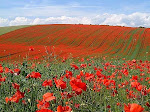
Poppy Field
In Flanders Fields
In Flanders Fields the poppies blow
Between the crosses row on row,
That mark our place; and in the sky
The larks, still bravely singing, fly
Scarce heard amid the guns below.
We are the Dead. Short days ago
We lived, felt dawn, saw sunset glow,
Loved and were loved, and now we lie
In Flanders fields.
Take up our quarrel with the foe:
To you from failing hands we throw
The torch; be yours to hold it high.
If ye break faith with us who die
We shall not sleep, though poppies grow
In Flanders fields.
Lieutenant Colonel John McCrae, MD (1872-1918)
Between the crosses row on row,
That mark our place; and in the sky
The larks, still bravely singing, fly
Scarce heard amid the guns below.
We are the Dead. Short days ago
We lived, felt dawn, saw sunset glow,
Loved and were loved, and now we lie
In Flanders fields.
Take up our quarrel with the foe:
To you from failing hands we throw
The torch; be yours to hold it high.
If ye break faith with us who die
We shall not sleep, though poppies grow
In Flanders fields.
Lieutenant Colonel John McCrae, MD (1872-1918)
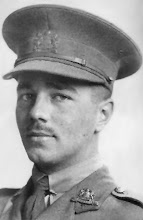
Siegfried Sassoon
Wilfred Owen
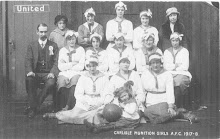
Munitions Girls
Blog Archive
IB ENGLISH A1 HIGHER LEVEL AT BIS VIETNAM
Considering the human experience through Love and War.
No comments:
Post a Comment