REGENERATION

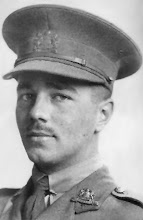
"...I believe that I may help to destroy the callous complacence with which the majority of those at home regard the continuance of agonies which they do not share, and which they have not sufficient imagination to realise."

Siegfried Sassoon - 1917

Saturday, November 14, 2009

CHARACTERIZATION - COMMENTARY ON CECILIA (PAGE 96-99)

KEY PASSAGE – CHAPTER NINE (PAGE 96-99)

We are reading this extract from The Author’s point of view, but its Cecilia whose thoughts we are aware of. Hence, the author is giving us Cecilia’s account of what is happening.
This is important, as even though Cecilia’s thoughts are what we are aware of, it is the authors comments that we take note of.

Overall, we could say that the author’s intentions are to make us relate to Cecilia, expose different facets to her character and how she is in the privacy of her room, what her train of thoughts are.

The use of the words “immediately” and “reconsider” and “moments inspiration” indicate Cecilia’s over-thinking mind, as she acts fast and is frequently inspired. She seems to be creative and energetic. Also, she is understanding and has good crisis-management abilities as she is calm and reserved when she ought to be on behalf of other people – “You’ve got one sock each then, and you’re fighting over it.” – (the scene when the twins come to her for assistance even though she has other things to handle)

Authorial comments that originally spring from Cecilia’s train of thought such as, “Its air of invulnerability was heightened by the darkness of her eyes” portray Cecilia to be very aware of her features, as she puts a lot of thought into things.
Also, The rhetorical questions to herself (directed at the reader – “How was she to think straight?”) and lists “swapped her pearls, re-touched her make-up, applied perfume”, indicate Cecilia’s restless, over-wrought character at this point, yet it also illustrates her energy levels and ability to be fast-paced and energetic.

Yet, she is easily over-wrought and when in flurry, over-whelmed. However, Ian McEwan uses A HYPHEN to describe the dress she chose out and how exactly it’s the best choice. “Hem – a safe choice.” – This use of this particular sentence structure/syntax/punctuation illustrates Cecilia’s calculated+reasonable mindset+way of thinking.

Ian McEwan uses SIMILES to shed light on Cecilia’s thought pattern. He claims that she feels (in certain cases) like AN OLDER PERSON OF 70/80. “80 year olds party frock – future self” - PERHAPS SHES SCARED OF OLD AGE. She mocks old age, “all I need is rabbit buttons” – perhaps she has distaste for older people. Maybe she’s narcissistic? And she LOVES HER YOUTH, yet she seems like she can exaggerate scenarios. She is very SELF CONSCIOUS – “figure-hugging” – proud of her sex appeal.

“slippery+secure” – she feels sexually alert. SIBILANCE TOO- indicates softness/sleekness, maybe she wants to feel like that in Robbie’s company? – This is an indication to SENSOUS THOUGHTS ABOUT HIM.

She feels/is – young and energetic. She loves her youth, confidence and sexuality. However she is a complex character – she doesn’t want to FEEL TOO YOUNG. “wouldn’t help looking like sherley temple” - strong approach to adolescence. She wants to MATURE. A very anxious, demanding, thoughtful character. She is merely concerned about her image – Perhaps to impress someone (Robbie in this case)

She is sensuous – as McEwan gives us an indication to her age (post – finals gown) – we can tell that she is young and thriving and perhaps her restlessness is to do with impressing someone. She is self-conscious but not to the point of obsession.

In contrast to that, as youthful as she wishes to be, McEwan presents to the readers her maternal side. She is soft, motherly, caring and affectionate – there is an adult side to her – “She couldn’t help feeling gratified” (as the twins held her hands)

But, at the same time, she maintains her lively, thoughtful behaviour out of will – because a short sentence follows the aforementioned quote “she couldn’t not help thinking about her dress” – her thoughts steer back straight to her, and this short sentence (syntax) – shows her over-working/passionate/restless/self-conscious mind.


DOMESTIC SPACES - THE LIBRARY (ALSO IN HARD COPY)

Domestic Spaces: THE LIBRARY (PAGE 84)

CHARACTERS RELEVANT

1. Robbie

KEY IDEAS RELEVANT

1. Robbie’s train of thought

2. When he goes to return a book in the library of the Tallis household

BARRIERS AND CONNECTIONS

1. Notions to class difference raised as “Volumes on Versailles he had borrowed, first day he noticed his awkwardness in her presence, state of his socks – holed at the toe”

2. Robbie and Cecilia have very different status’ and he is entering the “sacred” part of the house, “dusty old paper” – the library is an old place but has books that are classics and worth a lot.

3. A private place – privacy – the surroundings have been touched by Cecilia, this gives Robbie the chance to touch what she has touched in a sacred manner, “worshipping her traces.”

SIGNIFICANCE TO THE NOVEL AND THEMES

1. The setting of the library at this point is crucial to dictate the grandeur and privacy of this place – it signifies + dictates the connection between Robbie’s class and Cecilia’s class and how perhaps it will come to affect their future (as Briony will get involved and render him too worthless for his sister)

Domestic Spaces: THE LIBRARY (PAGE 121-124)

CHARACTERS RELEVANT

1. Briony

KEY IDEAS RELEVANT

1. The library as the central focal point of the house “if father was here, he would be sat most of the time in the library, had a good idea which authority to consult and would take her into the library to help her find it” – Briony mentioning her father and the library. Library is closed when her father isn’t around, which is most of the time, she stops by, but doesn’t enter.

2. She walks in on Robbie and Cecilia making love and is terrified.

3. Cecilia leaves and Briony is left to wonder about what just happened.

BARRIERS AND CONNECTIONS

1. The barrier is the door to the library with its grand “brass” handle, that Briony turned, something that shouldn’t have been opened was, and that makes a connection with the oncoming future events – BRIONYS INTRUSION IN THEIR LIVES.

2. Area of privacy and seclusion “he trapped her where the shelves met at right angles” but the entrance of briony – is an unexpected encounter that forms the base of the novel.

3. Also, Briony entering a forbidden zone only to encounter something that is beyond her grasp to understand – she is on the edge of adolescence.

SIGNIFICANCE TO NOVEL AND THE THEMES

1. The domestic space of the library is dark as the shapes in there are “dark” but it is still slightly “illuminated” by the lamp that illuminates a little more than the “tooled leather surface” – perhaps this is an indication to Briony’s understanding? Ignorant, but just slightly enlightened, only to a certain degree.

2. Also, perhaps this unexpected intrusion signifies the transition that Briony makes from a normal livelihood to a more complex, tedious one. The domestic space of the library (that is meant to be enclosed and not chanced upon randomly) makes it possible for us to see that an unwelcome guests intrusion could spark many events – of which many will be deadly.

Domestic spaces: THE LIBRARY (PAGE 138-139)

CHARACTERS RELEVANT

1. Briony

2. Cecilia

3. Robbie

KEY IDEAS RELEVANT

1. Cecilia and Robbie are getting intimate

2. Briony walks in on them

BARRIERS AND CONNECTIONS

1. A place that is essentially ENTIRELY within the house, the very core of the hose “in a house, in total silence”

2. “Dimly illuminated” – must be quiet, silent and there are rules in a library.

3. For adults and private functions, age difference, adolescence “There was no good reason why she should be here”, PRIVATE, inner part of the house, not where guests or children are allowed. PRIVACY+SECLUSION.

SIGNIFICANCE TO THE NOVEL AND THEMES

1. The library in many ways signifies the divide between the adult world and the child’s world.

2. Briony walking into the room in the middle of Cecilia’s and Robbie’s act breaks the barrier because initially the library is used to dictate an enclosed area that is forbidden, and when it is trespassed, there are grave consequences. Hence, the intrusion into the library (where Briony is NOT supposed to be) is also (on a larger scale) an intrusion of Briony into Robbie’s and Cecilia’s lives. – there is suspense and tension built, there is a climax because Briony opens a door that is not supposed to be opened (at least by her)

3. Also, since the library is a place of knowledge and privacy and solitude, Ian McEwan uses the words (from Robbie’s perspective) “Propelled from her depths of ignorance, silly imagining and girlish rectitude, she had come to call a halt” – this places emphasis on Briony’s inability to be mature as she is ignorant and girly and has come to call a halt. There is a huge contrast displayed as we can see why she isn’t allowed in the library to start with, she is ignorant, and since it is taboo for her to be there, she can’t be permitted to impose rules on others and “call a halt”

ATONEMENT - PAGE 3/4 EXTRACT ANALYSIS

Atonement, a novel by Ian McEwan, is a novel set in Britain during the mid 1930’s in the Tallis’ household. The novels protagonist is Briony Tallis and the opening scene of the novel (page 3 and 4) is written with the purpose that the Author wishes to foreshadow (through Briony’s play “The Trials of Arabella”) and shed light on Briony’s character and the theme of melodrama. All this is conveyed through the Authors use of sentence types/functions and connotations.

Ian McEwan, an omniscient 3rd person narrator, introduces us to Briony in the opening pages and we learn about her character through her own perceptions of herself and through Ian McEwan’s perception of her through authorial comments and Briony’s dialogues and behavior.
Briony sees herself as organized and independent, as she “designed the posters, programs and tickets” and she also perceives herself to be passionate as she “burrows in her bed” and has a “passion for secrets”, but also, we see her passion for romance, drama and melodrama through her artistic temperament as she was caused to “miss a breakfast and lunch” to complete her play. Although, her artistic temperament could be misinterpreted by the reader as Briony’s need to exaggerate. Furthermore, her tendencies to be romantic and melodramatic are shown through her Play that we are told about. She’s very moralistic because her story has Black And White morals and is Dramatic, with the use of the phrases “desperately sad, reckless passion”; she is also very romantic as she simply must include a “prince in disguise.” In addition to that, she is very well educated as we are apprised of her use of correct syntax, “the play – for which…”

However, the author’s intent is to portray her differently through his authorial comments. McEwan introduces us to Briony through phrases like “Controlling demon” and this is to illustrate Briony’s controlling traits, alongside that, there is the use of the phrase “Under strict instruction not to touch the wall”, hence Briony wants everything to be her way, this doesn’t indicate her independence, just her controlling traits. “Reckless passion and wicked count” are phrases used by the author to describe the characters that are Briony’s construction in her play, and hence, we can see that the Briony is not creative, just merely melodramatic and clichéd. Also noted by the readers, Briony is very manipulative and attention-seeking as she “put her arm around her mother’s shoulder, studying her face”, and therefore we can see that she seems to be the kind of person to use her mother’s maternal inclinations to gain acceptance and approval and as we can see at the end of the extract, Briony is in dire need of attention as SHE wants to be the one asked to be a bridesmaid, SHE wants to be in the limelight during her brother’s wedding. And because she is desperately under the impression that he must quit his succession of long girlfriends and must be “guided to the right kind of wife”, we can see Briony’s naïve mindset exposed. She may be very innocent, “she had no secrets” but she is very obsessive, “desire to have the world just so.” And because of her innocence and naivety, the author foreshadows the doom that is to come because of Briony’s youth, ignorance, moralistic views and desire for secrecy/importance/attention.
Thus, since we took note that Ian McEwan includes Multiple narration from himself as the omniscient, 3rd person narrator, and from Briony, we can understand that through his characterization that when it comes to Briony, we must render her an unreliable narrator because of her childish traits and from that Ian McEwan effectively foreshadows. He does so through the use of introducing her at the very start of the novel, hence if we are apprised of her naivety and unreliability in the start of the novel, we can then tell that this protagonist will influence the course of the novel, and hence, foreshadowing is effectively done.

Not only does Ian McEwan foreshadow through the introduction of Briony and her traits, but through use of various connotative words such as “tempest”, perhaps he may be foreshadowing by telling us of the impending doom or the reality of Briony’s character and how it may change. Also, the authors opening scene is intended to foreshadow and this is, once again, impressionably done so through the introduction of Briony’s play, “The Trials of Arabella”, the tale is a tale of passion and is overly dramatic and childlike, and we can see that Briony’s thoughts are that she believes that one must reflect, redeem, get rewarded and that reckless passion and lust are wrong and that well-founded love is good. She believes that passion MUST be punished, one must reason and seek redemption, and therefore, we can see that in her head, she is very moralistic. And this may not be the case because sometimes passion May be good and love may be wrong, and not always will a good decision lead to a reward. However, as we see Briony’s head-strong belief in this moralistic view, we can see that there is impending doom as she will impose her influence on whatever situation she can.

Thus, we can clearly see that, through the use of connotative meanings and the introduction of Briony’s character that Ian McEwan effectively introduces is protagonist, and in doing so, impressionably foreshadows the impending doom that forms the course of the novel.

Sunday, November 1, 2009

National Identity

Write 500 words analyzing the role of one character in the novel and how the author uses them to convey ideas about National Identity.

Captain Corelli is created to express DeBernieres’ thoughts about the stereotypical views of different nationalities. The novel contradicts the idea of a book having its title but its main character comes after the book has gone halfway.
Corelli was first introduced to the readers through Carlo’s descriptions; “he observed life with raised eyebrows”, “he would say things for the sake of their value as amusement”, “he did not care what kind of impression he made”. These descriptions make Corelli a carefree person, filled with sense of humour, but also love women. He is a man full of sense of humour, cheering everyone up, he is the shining star within a group. By creating “La Scala”, it reveals the passion for music that Corelli has; this gives Corelli an artistic side. These could be the common characteristics an Italian soldier might possess.
But as an officer of an army, Corelli is describe as not serious and being funny. This shows that the Italian army is not very serious about this war; they do not care about this battle, and put soldiers’ lives at a low price. This could also reveal the heartless characteristics of Italian soldiers. There were no organisation or planning before the battle at the island, this enlarges the careless thoughts of the Italians, but also the over-confidence that is within the soldiers. Humourous but careless are characteristics that a typical Italian soldier might have.
Captain Corelli plays the mandolin in his group “La Scala”, this gives him leadership. Within any group of music, usually the person who can sing and play the instrument can have the skills but also the trust from others to lead the group. Through this, you can say that Italian soldiers have the ability to lead a particular group.
From being broken-hearted, Carlo’s heart is cured with the presence of Corelli. Corelli heals Carlo’s heart and makes him a life-loving man again. Through his artistic skills, his sense of humour, excludes his charming appearance, he now possesses Pelagia’s heart, after it has been smashed up by the comeback from Mandras. 2 people whose hearts have been broken, now are cured by Corelli through his typical characteristics that Italians soldiers might have. This info that DeBernieres adds into the novel, lets the readers know that Italians could be charming, intelligence and funny. You could say it is impossible for Pelagia to get angry at Corelli because he makes her laugh every time she sees him, the silliness he has around her also by being himself, not taking things serious.
In conclusion, we, as the readers, can say that a typical Italian man can have the sense of humour, the attractive appearance looking, the artistic value within their souls, and also the carefree characteristics, that does not take things serious.

Friday, October 30, 2009

Write 500 words analyzing the role of one character in the novel and how the author uses them to convey ideas about National Identity.

DeBernieres, through the novel, exposes ‘national identity’ as a major theme. He reveals the stereotypical views of each nationality and portrays them through certain characters. One in particular, is Benito Mussolini, where DeBernieres successfully illustrates him as the stereotypical Italian. However, DeBernieres only displays the negative stereotypical views of Italians through Mussolini in chapter 2. This can be juxtaposed later on to Captain Corelli, who is given the positive stereotypes of an Italian, paving the way for the reader to establish a stronger connection to Corelli. In chapter 2, Mussolini is depicted as the stereotypical Italian who is aggressive and judgemental, questioning and always acts before thinking.

Throughout chapter 2, it is clearly evident that DeBernieres shows Mussolini as a person who always acts before he thinks; a trait of a stereotypical Italian. This is achieved by the use of the fast-paced sentences that Mussolini uses. “Come here. Yes, you. Come here...Really, do you think so? I am not so sure.” There seems to be no time in Mussolini’s mind to stop and think about the decisions he is making. DeBernieres tackles this stereotype to show the type of man Mussolini was in history. He was a man who did make irrational decisions, mainly because he acted before coming to a valid conclusion. Along the chapter, DeBernieres thoroughly shows Mussolini’s incompetence to think before acting. He treats war like a game of chess, where pieces can be sacrificed willingly without a reason. When he speaks to the king of Italy about his plans, he is reckless, ignoring the millions of lives his proposed plan can affect. “Imagine the impression on the Fuhrer when he sees us sweep through Greece in a matter of days...But why not take [Greece and Yugoslavia]?...but it’s going to be a walkover anyway...But remember, we want to invade when we want to invade.” There is no emotion shown for the countless families he will affect if his plan does come into play. Mussolini speaks with such confidence that his plan will succeed, clearly revealing that he has not thought over it for alternatives.

DeBernieres presents Mussolini as aggressive and judgemental- stereotypes of an Italian. The way DeBernieres exposes Il Duce’s aggressive nature puts Mussolini as almost barbaric. He presents Mussolini as a big ‘bully’, who loves to inflame trouble. “We must continue to stir up liberation movements in Kosovo and irredentism in Tsamouria”. DeBernieres also depicts Mussolini as the one who brings the first fist in a fight. He wishes to initiate an invasion on Yugoslavia and Greece “without telling Hitler.” “It is a question of grasping opportunities and evading perils. It is also a question of expanding the empire...Imagine it...the whole Mediterranean littoral rebuilt into a new Roman Empire.” His method of action is very swift, decisive and forceful. DeBerniere’s selection of words expressed by Mussolini is also very aggressive. They are vulgar, unfriendly and alarming. “No, there idiota...In the name of God, do I have to do everything myself? What’s the matter with you, man? ...I must always be higher than them.” This flaunts Mussolini’s desire for greater authority with the way he speaks. It illustrates his aggressiveness, even to comrades. DeBernieres makes Mussolini a very judgemental character. This attribute is a stereotype, and intertwines to his aggressive nature. “I swear the country’s got warmer since the Great War. It makes men lazy, it makes them incompetent.” Mussolini shows repulsion to his own nation and its people. It shows his lack of sympathy for his country, revealing how aggressive he is. The reader now feels nothing but distaste towards Il Duce.

Another stereotypical view of Italians is their frequent use of questions when they do not agree to a certain statement or idea. This is a negative stereotype in which DeBernieres chooses to use, so that he can create a hateful and unwelcome connection between the reader and Mussolini. The majority of the questions Mussolini asks are rhetorical and commanding. “Really, do you think so? I am not so sure...I suppose you agree with everything I say? ...do I have to do everything myself? ...what else do you expect when you go fishing with hand-grenades?” This presents Mussolini as an irritating character who, when he can’t have his way, will attack with countless questions until he is victorious. DeBernieres wants to emphasise this stereotype, stressing how much Il Duce matches the negative stereotypical Italian.

DeBernieres has successfully portrayed Mussolini as a stereotypical Italian who always acts before thinking, is aggressive, judgemental and questioning. Although the stereotypes mentioned above do not apply to Italians in general, DeBernieres wants the audience to be introduced to a different range of identities and their national origins, from the aggressive Mussolini to the kind-hearted Carlo to the romantic Corelli.

Tuesday, October 27, 2009

Tuesday 27th September

Write a detailed personal response to the novel, Captain Corelli's Mandolin.

Comment on the following:
  • Aspects of the novel that you enjoyed.
  • Characters that you found interesting/well written...
  • Aspects that you found frustrating (constructive criticism: explain why!)
  • DeBerniere's style (use of epistolary, satire, narrative, monologue, blending of fact/fiction, multi-narrators etc...)
  • Whether you would recommend this book.

Use paragraphs and write about 500 words.

Monday, October 26, 2009

NATIONAL IDENTITY

Write 500 words analyzing the role of one character in the novel and how the author uses them to convey ideas about National Identity.

DeBernieres, effectively uses various characters to shed light on his ideas and views on National Identity.Through the use of characters such as Corelli, DeBernieres is effectively able to express his portrayal of national identity through mostly the use of stereotypes, whether they are good or bad. DeBernieres does so because national identity and pride play a very important role/theme in the novel and in the war. For example, DeBernieres uses Iannis to convey his thoughts through an extract on page 53 where Iannis states in a clear-cut manner, a summary of all the stereotypes when it comes to Italians, Germans and Greeks. Not only is Iannis the character used to voice DeBernieres thoughts but Iannis is also established as the voice of Greece and in this way we see that Iannis is constructed to be a stereotypical Greek man. When Iannis gives the Corelli a summary of what Greeks are all about, on page 289, Iannis includes himself whilst describing the Greeks and we begin to see his role as a stereotypical Greek. He, not only is the voice of reason but, symbolizes intelligence, philosophy, education and reason. His extract describing Hellenic and Romoi Greeks talks collectively about Greece, himself included and he vociferates with passion, reason and great intelligence with his good vocabulary and vast understanding.Therefore, we can see that DeBernieres, through Iannis, apprises the readers of how “Greeks are equal to the best”, this is exemplified with how Iannis wants to educate his daughter and make her learned because he wants her to stand tall against other men and be among the best of medical patrons. Also, he states that Greeks are “hospitable to strangers” and this isn’t only an empty statement but DeBernieres sheds light on it as we actually see Iannis and Pelagia willingly taking care of Corelli despite his role as the ‘enemy’. Also, we are told of how Greeks are “nostalgic for something” and “hate solitude” and their hatred for solitude is described when we notice how Iannis makes regular visits to the Kepheneion and Pelagia to the well and is content with her company in her goat and Lemoni at times. Hence, it is seen through the Pelagia and her nursing father, the love for education and the desire to repress violence that they so willingly do, Pelagia with her desire to be like her father in the medical field and their need to be hospitable towards a stranger just for the mere reason that they are simple, pastoral people who don’t feel the need to be violent. And as most Greeks, they are described to be simplistic and pastoral in their lives, their lives in Greece, Greece with its ancient history and philosophy and art and literature, “she inspected the ruminating goat for ticks, burned them off with a hot needle and then burrowed through the coarse hair all over again.” Also, when Lemoni arrives with an injured pine martin and asks Iannis for help, he believes that he could simply spare the pine marten its burdens and suffering and kill, but because of the Greek within him that is reasonable, educated, controlled and nonviolent, he decides to do his best to rescue it, “he contemplated the deed for a few moments, exhorted himself to the act, he bathed the wound carefully and put single stitch in it.” Hence, it is through the simplistic lifestyle yet the great vast amount of knowledge and reason displayed through Iannis (And Pelagia) that the readers are apprised of the stereotypical view of Greeks that DeBernieres effectively sheds light in order to convey his ideas about national identity alongside securing the readers sympathy for Greece and its people.

Friday, October 23, 2009

Write 500 words analyzing the role of one character in the novel and how the author uses them to convey ideas about National Identity.

Write 500 words analyzing the role of one character in the novel and how the author uses them to convey ideas about National Identity.

The author uses Captain Antonio Corelli to convey to us the ideas about his national identity. He is an Italian captain in the novel and although the he is the title of the novel, he is introduced very much after the beginning of the book. It is almost half way through the book when he is introduced.
The very first time we read about him is when he orders his platoon to turn their heads and stare at Pelagia, whom he describes as “Bella Bambina.” The actual quote from the book is “Bella Bambina at nine o’clock,” he shouted, “E-y-e-s left.” From this we can see that Corelli was a silly character and also knowing that he is an officer of an invading force, we can see that Italians were disorganized, chaotic and didn’t take this seriously at all.
Before we see this we also see that the Italian army “disembarked apologetically” when they are an invading force and should be authoritative and forceful. This can be seen from “Down in the harbours the men of the Acqui Division disembarked apologetically from their landing craft and waved cheerfully but diffidently to the people in the doorways.” They are the exact opposite of the German army. They are cheerful when they are entering an island which they must conquer and the soldiers are waving at the local people. We also see that there was no organization or planning before the invasion of the island. We can also see that they are very relaxed and are ambling by. This can all be seen from “platoons of paratroopers ambling by, their commanders consulting maps”. This gives us an idea of how a typical Italian soldier would be. From this we can infer that the Italians are humorous people who do not take things very seriously.
From all the information we see about the Italian invasion force and the national identity of Italians match to Corelli. Corelli’s role in the book is the person who replaces the people who 2 other characters loved. Firstly there is Carlo, who loved Francesco but now loves Corelli and secondly there is Pelagia, who loved Mandras previously but now loves Corelli. In this role he shows us his national identity both when he is with Carlo and when he is with Pelagia.
Firstly, when he is with Carlo and his platoon, he had created “La Scala” which is a group of his soldiers who meet and sing in the latrines. This shows us a kind of comical view of Corelli and his platoon. Corelli had even made rankings with musical terms such as ‘breve’ or ‘semibreve’. Also, in Carlo’s description of Corelli, we can see that he doesn’t take life very seriously, carefree, humorous and exaggerated. We can also see that he is flamboyant and that he loves children, women and singing. This can bee seen from “prone to dramatic exaggeration….always larger than his circumstance….say things for the sake of their value as amusement, with an ironic disregard for the truth…observed life with raised eyebrows…..had none of that fragile self-pride that prevents a man from telling jokes against himself.” And “He adored children, and I saw him kiss a little girl on the head…..he loved to make pretty women giggle by snapping his heels together and saluting them with a military precision so consummate that it came over as a mockery of everything soldierly….His battery had a latrine known as ‘La Scala’ because he had a little opera club that shat together there at the same time every morning”.
Secondly, when Corelli is with Pelagia, he is always making her laugh and never gets angry at her no matter how hard she tries. For example, when Pelagia soaked his pistol in water to make it rust and was caught, “her heart galloped painfully with fear and anxiety” but Corelli didn’t give the reaction Pelagia wanted. He just said “I suppose you have done me a favor. I should have dismantled it for cleaning and oiling a long time ago” and lets it pass. He doesn’t take this seriously and punish Pelagia. Also he acts silly around her. Some examples are when he “tied a cork to a piece of strinf, and sprinted about the house with Psipsina in hot pursuit” and when he “sprang dancing to his feet, capering ridiculously and crying ‘I won, I won’”.
Therefore, the author uses Corelli’s role in the novel to show us the national identity of a typical Italian.