- In what ways does he demonstrate patriarchal views? (Vincent)
- How does Rivers respond to him in this extract? (Daniel)
- How does Billy's mother justify her husband's attitude on p.58 (Truc)
- How does Barker use Prior to explore her theme of patriarchal duty in the novel? (Adam)
- How does Rivers fulfil the role of Patriarch in the novel? (Arusha)
Thursday, September 17, 2009
Task Two - For Thursday 27th September
Look closely at pages 55-58 and comment on Barker's portrayal of Mr Prior, father of Billy Prior.

Tuesday, September 15, 2009
Homework Task
Complete an essay (700 – 1000 words):
‘To what extent does Barker suggest that traditional social barriers have been expanded or eradicated during the course of WWI?’
In your response, you should consider the following:
‘To what extent does Barker suggest that traditional social barriers have been expanded or eradicated during the course of WWI?’
In your response, you should consider the following:
- Barker’s presentation of the role of women
- Changing attitudes to sex and sexuality
- The literary devices Barker uses (eg characterisation, narrative, imagery and symbolism, language and style)
Women and Sexuality in Regeneration
On the role of women in her books Barker states that "In a lot of books about war by men the women are totally silenced. The men go off and fight and the women stay at home and cry basically, this is the typical feature. And the women in the trilogy [of which 'Regeneration' is the first novel] are always deeply significant, and whatever they say in whatever language they say it in, it is always meant to be listened to very carefully." Barker points out that the women in the munitions factories were expected to produce weapons to kill thousands, but a woman who attempts to abort her unborn child is criticised.
Notes from 15/09/09
3 young, one older—different groups brought together by war experience.
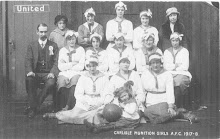
‘Munitionettes’—paper has coined a phrase for them, mocking?
Lizzie—entertaining the girls with stories, particularly sexual and bawdy content, innuendo, vulgar and course language. Language is clearly uneducated (social class).
“Let him have what he wants”—sexual freedom. Emphasis on Let him have emphasises that the women are in control.
Sarah makes the first move—she approaches Prior; uncommon in society prior to the war.
Behaviour is unlike traditional behaviour, the girls are slightly drunk (?), Sarah is flirtatious and displays undignified behaviour.
Women enjoying their freedom “…minor explosions of giggles…”.
‘Pubs round here don’t let women in’ show that limitations to the women’s freedom still lingers. Social expectations—men take prostitutes to hotels for the night but Sarah seems keen to go with Prior alone.
“She burst out laughing” – shows a fun, strong character.
“She held out her hand to him in a direct, boyish way…” Confidence, usage of male traits.
“…she knocked them back…” freedom of women to consume alcohol freely. Masculine traits again displayed.
Sarah enjoys her work despite long hours, enjoying the money and independence. “Twelve hours a day, six days a week, but she liked the work.”
Men losing their confidence as women develop theirs. “They [women] seemed to have changed so much during the war, to have expanded in all kinds of ways, whereas men over the same period had shrunk into a smaller and smaller space.”
EXTRACT 2 p.199-202
“She’s great fun” –portrays the women differently from the traditional view of women, who are supposed to bear children and care for the husbands.
“She fell in with the other girls” relates to the male environment of a factory yet the society lacks male presence.
“…hadn’t yet managed to adjust.” The women are still adapting to their new roles in societies. “Subdued” suggests that it is still an unusual situation for them.
Masculine behaviour/imagery—“overalls”, “dragging at a cigarette”, “sweat”.
“women appeared…jolly…” emphasis on fun, laughter.
Vulgar, sexual language “…arseholes…bugger…” Homosexual relationships—previously a taboo subject is now openly discussed by the girls, sexual liberation. Displays a lack of respect for men?
“Raucous laughter”—dirty jokes, very masculine.
Betty, attempted abortion. Conflict between traditional view that women breed, and new independence-women work.
Notes from 15/09/09
Attitudes towards women and sexuality
EXTRACT 1 p.87—90
Traditional views of women “…the smell of steak frying reminded him of home”. When Prior left for the war, women would still have been behaving in a traditional manner. Barker uses the image of domesticity to link women to the home.
3 young, one older—different groups brought together by war experience.
‘Munitionettes’—paper has coined a phrase for them, mocking?
Lizzie—entertaining the girls with stories, particularly sexual and bawdy content, innuendo, vulgar and course language. Language is clearly uneducated (social class).
“Let him have what he wants”—sexual freedom. Emphasis on Let him have emphasises that the women are in control.
Sarah makes the first move—she approaches Prior; uncommon in society prior to the war.
Behaviour is unlike traditional behaviour, the girls are slightly drunk (?), Sarah is flirtatious and displays undignified behaviour.
Women enjoying their freedom “…minor explosions of giggles…”.
‘Pubs round here don’t let women in’ show that limitations to the women’s freedom still lingers. Social expectations—men take prostitutes to hotels for the night but Sarah seems keen to go with Prior alone.
“She burst out laughing” – shows a fun, strong character.
“She held out her hand to him in a direct, boyish way…” Confidence, usage of male traits.
“…she knocked them back…” freedom of women to consume alcohol freely. Masculine traits again displayed.
Sarah enjoys her work despite long hours, enjoying the money and independence. “Twelve hours a day, six days a week, but she liked the work.”
Men losing their confidence as women develop theirs. “They [women] seemed to have changed so much during the war, to have expanded in all kinds of ways, whereas men over the same period had shrunk into a smaller and smaller space.”
EXTRACT 2 p.199-202
“She’s great fun” –portrays the women differently from the traditional view of women, who are supposed to bear children and care for the husbands.
“She fell in with the other girls” relates to the male environment of a factory yet the society lacks male presence.
“…hadn’t yet managed to adjust.” The women are still adapting to their new roles in societies. “Subdued” suggests that it is still an unusual situation for them.
Masculine behaviour/imagery—“overalls”, “dragging at a cigarette”, “sweat”.
“women appeared…jolly…” emphasis on fun, laughter.
Vulgar, sexual language “…arseholes…bugger…” Homosexual relationships—previously a taboo subject is now openly discussed by the girls, sexual liberation. Displays a lack of respect for men?
“Raucous laughter”—dirty jokes, very masculine.
Betty, attempted abortion. Conflict between traditional view that women breed, and new independence-women work.
Monday, September 14, 2009
Class and Social Division - By Arusha
Barker puts across her viewpoint of how savage the social system is in this dialogue-heavy novel through the characters of Rivers, Sassoon and Prior. Themes of masculinity and emasculation are present, and readers see how a break down can lead to emasculation. As Barker states early on in the novel, “they were trained to identify emotional repression as the essence of manliness”. Not only do men get emasculated due to their break down, but they are also looked down upon by the rest of society. Besides being treated indifferently due to break downs, they were “hiding” if they were physically injured, as Sarah states when she walked into a room full of despondent men who were physically injured, “They stared at her, this was a totally blank stare, it contained fear. Fear of her looking at the empty trouser legs, fear of her not looking at them.” Barker presents the way in which men were regarded if they lost a limb and how the rest of society, mostly referring to women, would feel about them. It was a given that these men were to face atrocities and if they came out the other end broken, then they were rejected. In Priors case, his family looked down upon him with no pride because Prior came back a broken man, his father previously stated “I’m not proud”. We see that, through Prior, Barker insinuated that no matter how hard a man tried to be courageous, such acts of atrocities committed would ALWAYS wound a man, but apparently society expected more of them. These social divisions began to seem futile and inexplicable, because those that judge the wounded had not experienced the catastrophe themselves.
Also, Sarah has her mother visit her, and she states, “you have to admit, some of the ladies you work with, are rough.” Ada is of low social standard but her standards in people are high, she acts above her social standing and denies her daughter the right to get involved with a man such as prior who is a broken man and also an officer, “I suppose you let him in, they like it dished out for free, learn to keep your knees together.”
Class division is prevalent throughout the novel and is discussed between Rivers and his patients and also later during the course of the novel. During the time of The War, the class system hierarchy was rigid. Hence, not only did people face class divisions on a daily basis, but even in the midst of war. This is made evident through Rivers conversation with Prior one afternoon. Rivers tries to address the situation of snobbery that Prior was likely to face whilst in France. The phrase “Prior stared intently at Rivers” is used, and here we see that the language shows the extent of bitterness in Priors tone at the thought of having to talk about the class division. Prior talks of what the right shirt is to wear, and starts to aim insults at Rivers because even Rivers isn’t wearing the right shirt, apparently the right shirt is “a deep shade of khaki” of which neither of them are wearing, When Rivers questions if Prior fits in, Priors “face shut tight”, hence we derive that he wasn’t happy with this question because he came from a lower social standing. “it helps if you went to a good school, it helps what you wear, it helps what you eat”, the aforementioned phrase is repetitive and exhibits Priors anger toward the unnecessary existence of the class system. It is through Prior that Barker expresses dislike for the system throughout the harsh times of The Great War. There is a noticeable use of symbolism, there is a central motif of silence, so when Prior suffers from Mutism, the readers are positioned to see that the reason he does is because being in the lower class doesn’t enable you to voice your opinions because you will either be shot or silenced, hence when you can’t express your thoughts/emotions which are provocative, you do tend to have a psychological conflict and it is from this that Mutism sprouts.
Also, Sarah has her mother visit her, and she states, “you have to admit, some of the ladies you work with, are rough.” Ada is of low social standard but her standards in people are high, she acts above her social standing and denies her daughter the right to get involved with a man such as prior who is a broken man and also an officer, “I suppose you let him in, they like it dished out for free, learn to keep your knees together.”
Class division is prevalent throughout the novel and is discussed between Rivers and his patients and also later during the course of the novel. During the time of The War, the class system hierarchy was rigid. Hence, not only did people face class divisions on a daily basis, but even in the midst of war. This is made evident through Rivers conversation with Prior one afternoon. Rivers tries to address the situation of snobbery that Prior was likely to face whilst in France. The phrase “Prior stared intently at Rivers” is used, and here we see that the language shows the extent of bitterness in Priors tone at the thought of having to talk about the class division. Prior talks of what the right shirt is to wear, and starts to aim insults at Rivers because even Rivers isn’t wearing the right shirt, apparently the right shirt is “a deep shade of khaki” of which neither of them are wearing, When Rivers questions if Prior fits in, Priors “face shut tight”, hence we derive that he wasn’t happy with this question because he came from a lower social standing. “it helps if you went to a good school, it helps what you wear, it helps what you eat”, the aforementioned phrase is repetitive and exhibits Priors anger toward the unnecessary existence of the class system. It is through Prior that Barker expresses dislike for the system throughout the harsh times of The Great War. There is a noticeable use of symbolism, there is a central motif of silence, so when Prior suffers from Mutism, the readers are positioned to see that the reason he does is because being in the lower class doesn’t enable you to voice your opinions because you will either be shot or silenced, hence when you can’t express your thoughts/emotions which are provocative, you do tend to have a psychological conflict and it is from this that Mutism sprouts.
Class and Social Division - By Vincent
Class and social division has always been present in the English society in the pre-war period, and thus also present during the war and in the army. She portrays this by animating the characters in the novel in such way to show the situation at the time. One good example of this statement is when Sassoon’s soldier declaration was presented, he would either get “court-martialed” or sent to “Craiglockhart”, where patients suffering mentally from the war are sent. Firstly, the fact the army wanted to punish Sassoon for writing what’s on his mind shows the reader that saying what’s on a soldier’s mind was forbidden and that it was considered a serious issue to do so, because in the army, lower ranks like soldiers aren’t allowed to speak their minds due to social division because normal soldiers are usually lower ranking than the officers in the army as well as outside the army and officers are usually from a higher social class than normal soldiers.The fact that they wanted to send him to a mental hospital because of the declaration showed how much control and power the higher classes have over the lower classes. Even though he was introduced as a perfectly sane person when Barker introduced the character, especially when Sassoon asked if Rivers thought he was mad and the latter replied by saying “I’m quite sure you’re not”. This furthermore suggests to the reader about the situation in which Sassoon is in. He was sent to a mental hospital by the higher classes in the army to be silenced because they didn’t want him to talk bad about the government. This emphasizes the higher privileges people from higher classes have on lower classes.
One way Pat Barker emphasizes the difference between classes in the army is by showing symbolism, one example of this is when talking about mutism in the hospital, in the conversation, Rivers said that “officers don’t have mutism” this is symbolic because mutism symbolizes the inability to speak in the army for the lower classes. The fact that officers don’t have mutism shows the reader that officers have more privileges then normal people because they come from higher classes then normal soldier in the army.
One way Pat Barker emphasizes the difference between classes in the army is by showing symbolism, one example of this is when talking about mutism in the hospital, in the conversation, Rivers said that “officers don’t have mutism” this is symbolic because mutism symbolizes the inability to speak in the army for the lower classes. The fact that officers don’t have mutism shows the reader that officers have more privileges then normal people because they come from higher classes then normal soldier in the army.
Tuesday, September 8, 2009
TASK ONE
Throughout the novel, Pat Barker heavily challenges the typical attitudes to class division during WWI. This is evident through the characterisation of certain major characters, her use of language and symbolism, and the way in which she positions the reader during certain issues within the novel.
Barker is able to tackle the attitudes of class and social division that were deemed “typical” in WW1 through two of the protagonists within the novel. Prior, one of the patients at Craiglockhart, is an excellent vessel to allow Barker to expose the class and social division in society during the war. Prior was an officer himself of the army. Due to the short quantity of officers during the war, certain working-class men, such as Prior, were promoted to officers as “temporary gentlemen”. Prior depicts the flaws of these temporary officers, revealing their abuse of power and his continuous distaste for them. “...an officer saw three men smoking... sent them into the charge unarmed” (Pg. 66). The irony in Prior’s recount is that the officers and the soldiers are exactly the same class of men, yet a selected few has been granted authority over others, simply because their title begins with ‘Officer’, giving them the power to do whatever they please with other soldiers who were not lucky enough to be chosen . The second protagonist of the novel is Dr. W.H.R. Rivers, a psychologist at the hospital. Barker has included Rivers to represent the upper echelons of society. Barker has included Rivers to symbolise a bridge, filling the gap between upper and lower class. Rivers constantly converses with the working-class soldiers in the hospital. His methods are not rough or aggressive; they are forthcoming and responsive. During WWI, it was extremely rare to find a person of the higher class giving so much time and dedication for lower class soldiers, who might as well be seen as “cowards, shirkers, scrimshankers and degenerates” (Pg. 4). The reader has a feeling of respect and admiration for Rivers. With this emotion for Rivers, Barker questions the audience: “Why is there such a great division amongst the upper and lower class? Didn’t people have equal opportunities as others?”
Barker continues to challenge the attitudes in reference to class and social division through symbolism and her use of language. When prior is mute at the beginning of the novel, it symbolises the working-class men who have no say in the war, yet they are only expected to follow orders resembling slaves. This directly attacks the social division between the higher class and lower class. They cannot express their opinions and have no control over their own lives. The trenches depicted in the novel symbolise the graves for the working class. The trenches are where the soldiers eat, sleep and fight for their lives. Unfortunately, it is their place they must call ‘home’. In contrast, the higher class “gentlemen”, such as the generals and the superior officers do not have to face this dilemma. During the war, they would have slept in their own private bunks, or even, their private barracks. Barker’s use of symbolism magnifies the great difference between the lower class and higher class. Barker uses simplistic language to convey her message across, in regards to class and social division. The majority of this language is said through Prior. Prior, during one of his many sessions with Rivers, asks him, as well as the audience a rhetorical question. “The military mind doesn’t change much, does it?” (Pg. 67) Here, Prior releases his frustration towards the army because of their concept of social division. Barker forces the audience to interpret the stretched gap between the higher and lower class. It questions the reader and puts them in Rivers’ shoes. On the same page, Barker has purposely misspelt ‘bollocks’, a common slang term to describe something as completely nonsense, and replaced it with “Ball-ocks”. Prior uses this word when he states that “people at home say there are no class distinctions at the front”.
Barker is able to tackle the attitudes of class and social division that were deemed “typical” in WW1 through two of the protagonists within the novel. Prior, one of the patients at Craiglockhart, is an excellent vessel to allow Barker to expose the class and social division in society during the war. Prior was an officer himself of the army. Due to the short quantity of officers during the war, certain working-class men, such as Prior, were promoted to officers as “temporary gentlemen”. Prior depicts the flaws of these temporary officers, revealing their abuse of power and his continuous distaste for them. “...an officer saw three men smoking... sent them into the charge unarmed” (Pg. 66). The irony in Prior’s recount is that the officers and the soldiers are exactly the same class of men, yet a selected few has been granted authority over others, simply because their title begins with ‘Officer’, giving them the power to do whatever they please with other soldiers who were not lucky enough to be chosen . The second protagonist of the novel is Dr. W.H.R. Rivers, a psychologist at the hospital. Barker has included Rivers to represent the upper echelons of society. Barker has included Rivers to symbolise a bridge, filling the gap between upper and lower class. Rivers constantly converses with the working-class soldiers in the hospital. His methods are not rough or aggressive; they are forthcoming and responsive. During WWI, it was extremely rare to find a person of the higher class giving so much time and dedication for lower class soldiers, who might as well be seen as “cowards, shirkers, scrimshankers and degenerates” (Pg. 4). The reader has a feeling of respect and admiration for Rivers. With this emotion for Rivers, Barker questions the audience: “Why is there such a great division amongst the upper and lower class? Didn’t people have equal opportunities as others?”
Barker continues to challenge the attitudes in reference to class and social division through symbolism and her use of language. When prior is mute at the beginning of the novel, it symbolises the working-class men who have no say in the war, yet they are only expected to follow orders resembling slaves. This directly attacks the social division between the higher class and lower class. They cannot express their opinions and have no control over their own lives. The trenches depicted in the novel symbolise the graves for the working class. The trenches are where the soldiers eat, sleep and fight for their lives. Unfortunately, it is their place they must call ‘home’. In contrast, the higher class “gentlemen”, such as the generals and the superior officers do not have to face this dilemma. During the war, they would have slept in their own private bunks, or even, their private barracks. Barker’s use of symbolism magnifies the great difference between the lower class and higher class. Barker uses simplistic language to convey her message across, in regards to class and social division. The majority of this language is said through Prior. Prior, during one of his many sessions with Rivers, asks him, as well as the audience a rhetorical question. “The military mind doesn’t change much, does it?” (Pg. 67) Here, Prior releases his frustration towards the army because of their concept of social division. Barker forces the audience to interpret the stretched gap between the higher and lower class. It questions the reader and puts them in Rivers’ shoes. On the same page, Barker has purposely misspelt ‘bollocks’, a common slang term to describe something as completely nonsense, and replaced it with “Ball-ocks”. Prior uses this word when he states that “people at home say there are no class distinctions at the front”.
English Essay
Barker challenges typical attitudes towards class and social division WW1 to a large extent. In criticizing the attitudes towards that topic, she uses characterization of the characters Rivers, Sassoon and Prior.
Firstly she uses characterization. Rivers is characterized as a compassionate father figure to most of the soldiers being treated in Craiglockhart war hospital. In the book, Rivers is shown as a sympathetic and supportive person. He also suffers from stammering although he is an officer. In one instance from the book, Prior points out that Rivers stammers. He says “It’s even more surprising that you do” (that Rivers stammers). Then Prior goes on to keep on criticizing and almost insulting Rivers. Rivers is apparently uncomfortable and quickly says that his appointment with Prior has come to an end. Hence, Rivers avoids confrontation and just withdraws from Prior. Hence, Rivers, being an officer, does not appear to have any criticism for the social class division in Britain during the first world war.
Secondly there is Prior, who is at first uncooperative and defiant but slowly and gradually changes and accepts treatment. This is because Prior was one of the “temporary gentlemen” who were officers not because they had the right social status, but because more officers were required. Prior is the best tool to challenge the typical attitudes to social class division for Barker. She characterizes Prior so that he is very strongly against the idea of social class division and people who escaped unfavorable situations because they had a good social status and were wealthy. From the book we can see that Prior is always changing the subject of conversation and is always sarcastic. In the book Prior says “it helps if your shirts are the right color” which has a sarcastic tone and after he says that , he says to Rivers, “borderline” implying that Rivers isn’t quite there yet. Hence, based on Prior’s comments towards the division of social class, Prior is critical of it.
Lastly there is Sassoon, who was a low ranking soldier. He wrote “A soldier’s Declaration” in protest of the war, which was meant to be published to the public and influence as many people as possible. However, because of his social status, he was silenced by high ranking generals who held high social status. The author uses simple language to deliver the message clearly and in a straightforward manner. Hence by doing so, she develops a firmer relationship with the reader..
Firstly she uses characterization. Rivers is characterized as a compassionate father figure to most of the soldiers being treated in Craiglockhart war hospital. In the book, Rivers is shown as a sympathetic and supportive person. He also suffers from stammering although he is an officer. In one instance from the book, Prior points out that Rivers stammers. He says “It’s even more surprising that you do” (that Rivers stammers). Then Prior goes on to keep on criticizing and almost insulting Rivers. Rivers is apparently uncomfortable and quickly says that his appointment with Prior has come to an end. Hence, Rivers avoids confrontation and just withdraws from Prior. Hence, Rivers, being an officer, does not appear to have any criticism for the social class division in Britain during the first world war.
Secondly there is Prior, who is at first uncooperative and defiant but slowly and gradually changes and accepts treatment. This is because Prior was one of the “temporary gentlemen” who were officers not because they had the right social status, but because more officers were required. Prior is the best tool to challenge the typical attitudes to social class division for Barker. She characterizes Prior so that he is very strongly against the idea of social class division and people who escaped unfavorable situations because they had a good social status and were wealthy. From the book we can see that Prior is always changing the subject of conversation and is always sarcastic. In the book Prior says “it helps if your shirts are the right color” which has a sarcastic tone and after he says that , he says to Rivers, “borderline” implying that Rivers isn’t quite there yet. Hence, based on Prior’s comments towards the division of social class, Prior is critical of it.
Lastly there is Sassoon, who was a low ranking soldier. He wrote “A soldier’s Declaration” in protest of the war, which was meant to be published to the public and influence as many people as possible. However, because of his social status, he was silenced by high ranking generals who held high social status. The author uses simple language to deliver the message clearly and in a straightforward manner. Hence by doing so, she develops a firmer relationship with the reader..
Sassoon as representing the conflict between Duty and Morality
Duty: work that people are obliged to perform for moral or legal reasons.
Morality: the concern with the distinction between good and evil or right and wrong.
Siegfried Sassoon wrote: “Finished with the War – A soldier’s declaration” and was read out in the House of Commons, as well as being published in ‘The Times’. Here, it solely represents the conflict between duty and morality. He has a “willful defiance of military authority” because the duty of the soldiers has been manipulated and twisted against their morality. They have been sent to war by “political errors and insincerities for which the fighting men are being sacrificed”.
Sassoon is a considerate and sympathetic character. He speaks his mind, being truthful and faithful to his beliefs. Sassoon uses simple language to convey a simple message, “The war must stop”. He is not afraid to express his judgments to those who ask for it. He has hospitality for those around him and the morality of people.
Although his father left him during his childhood, Sassoon to his battalion, acts as a fatherly figure. “It was impossible not to think of the battalion…He’d ended one march pushing two of them in front of him, while a third stumbled along behind, clinging to this belt…he knelt to inspect their raw and blistered feet”. The reader shows sympathy for Sassoon, an officer who displays dedication and deeply cares about his soldiers. This is evident in Sassoon’s declaration, “I am acting on behalf of soldiers…I have seen and endured the suffering of the troops, and I can no longer …prolong these sufferings for ends which I believe to be evil and unjust”
Sassoon’s unique and distinct character made him a prominent war figure. His periods on duty were marked by exceptionally brave actions, including the single-handed capture of a German trench in the Hindenburg line. Hence, he was an example to other soldiers during the time. Sassoon’s view between duty and morality is further expressed within his poems. The poems depict the real-life war experiences through his eyes. From the poem: ‘To the Warmongers’, “I’m back again from hell…secrets of death to tell; And horrors from the abyss. Young faces bleared with blood, Sucked down into the mud…Moan out their brutish pain, as the fighters pass them by…And the wounds in my heart are red, For I have watched them die.” Sassoon uses graphic imagery to detail the day-to-day experience of war. Men who have been sent to war on an act of duty are experiencing events that are beyond their morality.
Sassoon joined the war in an act of patriotism, yet has now witnessed the horrors, questions the morality in fighting a senseless war. In one of his poems, he writes about the soldiers, showing sympathy for their death. “O my brave brown companions, when your souls/ Flock silently away…Death will stand grieving in that field of war/ Since your unvanquished hardihood is spent.”
Morality: the concern with the distinction between good and evil or right and wrong.
Siegfried Sassoon wrote: “Finished with the War – A soldier’s declaration” and was read out in the House of Commons, as well as being published in ‘The Times’. Here, it solely represents the conflict between duty and morality. He has a “willful defiance of military authority” because the duty of the soldiers has been manipulated and twisted against their morality. They have been sent to war by “political errors and insincerities for which the fighting men are being sacrificed”.
Sassoon is a considerate and sympathetic character. He speaks his mind, being truthful and faithful to his beliefs. Sassoon uses simple language to convey a simple message, “The war must stop”. He is not afraid to express his judgments to those who ask for it. He has hospitality for those around him and the morality of people.
Although his father left him during his childhood, Sassoon to his battalion, acts as a fatherly figure. “It was impossible not to think of the battalion…He’d ended one march pushing two of them in front of him, while a third stumbled along behind, clinging to this belt…he knelt to inspect their raw and blistered feet”. The reader shows sympathy for Sassoon, an officer who displays dedication and deeply cares about his soldiers. This is evident in Sassoon’s declaration, “I am acting on behalf of soldiers…I have seen and endured the suffering of the troops, and I can no longer …prolong these sufferings for ends which I believe to be evil and unjust”
Sassoon’s unique and distinct character made him a prominent war figure. His periods on duty were marked by exceptionally brave actions, including the single-handed capture of a German trench in the Hindenburg line. Hence, he was an example to other soldiers during the time. Sassoon’s view between duty and morality is further expressed within his poems. The poems depict the real-life war experiences through his eyes. From the poem: ‘To the Warmongers’, “I’m back again from hell…secrets of death to tell; And horrors from the abyss. Young faces bleared with blood, Sucked down into the mud…Moan out their brutish pain, as the fighters pass them by…And the wounds in my heart are red, For I have watched them die.” Sassoon uses graphic imagery to detail the day-to-day experience of war. Men who have been sent to war on an act of duty are experiencing events that are beyond their morality.
Sassoon joined the war in an act of patriotism, yet has now witnessed the horrors, questions the morality in fighting a senseless war. In one of his poems, he writes about the soldiers, showing sympathy for their death. “O my brave brown companions, when your souls/ Flock silently away…Death will stand grieving in that field of war/ Since your unvanquished hardihood is spent.”
Subscribe to:
Posts (Atom)