Throughout the novel, Pat Barker heavily challenges the typical attitudes to class division during WWI. This is evident through the characterisation of certain major characters, her use of language and symbolism, and the way in which she positions the reader during certain issues within the novel.
Barker is able to tackle the attitudes of class and social division that were deemed “typical” in WW1 through two of the protagonists within the novel. Prior, one of the patients at Craiglockhart, is an excellent vessel to allow Barker to expose the class and social division in society during the war. Prior was an officer himself of the army. Due to the short quantity of officers during the war, certain working-class men, such as Prior, were promoted to officers as “temporary gentlemen”. Prior depicts the flaws of these temporary officers, revealing their abuse of power and his continuous distaste for them. “...an officer saw three men smoking... sent them into the charge unarmed” (Pg. 66). The irony in Prior’s recount is that the officers and the soldiers are exactly the same class of men, yet a selected few has been granted authority over others, simply because their title begins with ‘Officer’, giving them the power to do whatever they please with other soldiers who were not lucky enough to be chosen . The second protagonist of the novel is Dr. W.H.R. Rivers, a psychologist at the hospital. Barker has included Rivers to represent the upper echelons of society. Barker has included Rivers to symbolise a bridge, filling the gap between upper and lower class. Rivers constantly converses with the working-class soldiers in the hospital. His methods are not rough or aggressive; they are forthcoming and responsive. During WWI, it was extremely rare to find a person of the higher class giving so much time and dedication for lower class soldiers, who might as well be seen as “cowards, shirkers, scrimshankers and degenerates” (Pg. 4). The reader has a feeling of respect and admiration for Rivers. With this emotion for Rivers, Barker questions the audience: “Why is there such a great division amongst the upper and lower class? Didn’t people have equal opportunities as others?”
Barker continues to challenge the attitudes in reference to class and social division through symbolism and her use of language. When prior is mute at the beginning of the novel, it symbolises the working-class men who have no say in the war, yet they are only expected to follow orders resembling slaves. This directly attacks the social division between the higher class and lower class. They cannot express their opinions and have no control over their own lives. The trenches depicted in the novel symbolise the graves for the working class. The trenches are where the soldiers eat, sleep and fight for their lives. Unfortunately, it is their place they must call ‘home’. In contrast, the higher class “gentlemen”, such as the generals and the superior officers do not have to face this dilemma. During the war, they would have slept in their own private bunks, or even, their private barracks. Barker’s use of symbolism magnifies the great difference between the lower class and higher class. Barker uses simplistic language to convey her message across, in regards to class and social division. The majority of this language is said through Prior. Prior, during one of his many sessions with Rivers, asks him, as well as the audience a rhetorical question. “The military mind doesn’t change much, does it?” (Pg. 67) Here, Prior releases his frustration towards the army because of their concept of social division. Barker forces the audience to interpret the stretched gap between the higher and lower class. It questions the reader and puts them in Rivers’ shoes. On the same page, Barker has purposely misspelt ‘bollocks’, a common slang term to describe something as completely nonsense, and replaced it with “Ball-ocks”. Prior uses this word when he states that “people at home say there are no class distinctions at the front”.
skip to main |
skip to sidebar

HIGHER LEVEL

STATISTICS OF WW1
Russia mobilised 12 million men during the war;
France 8.4 million;
Britain 8.9 million;
Germany 11 million;
Austria-Hungary 7.8 million;
Italy 5.6 million;
USA 4.3 million.
8,538,315 were either killed or they died.
21,219,452 were wounded.
7,750,919 were made prisoners.
So, the total casualties of World War 1 were 37,508,686
More German soldiers were killed than any other nation in WW1.
France 8.4 million;
Britain 8.9 million;
Germany 11 million;
Austria-Hungary 7.8 million;
Italy 5.6 million;
USA 4.3 million.
8,538,315 were either killed or they died.
21,219,452 were wounded.
7,750,919 were made prisoners.
So, the total casualties of World War 1 were 37,508,686
More German soldiers were killed than any other nation in WW1.
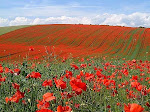
Poppy Field
In Flanders Fields
In Flanders Fields the poppies blow
Between the crosses row on row,
That mark our place; and in the sky
The larks, still bravely singing, fly
Scarce heard amid the guns below.
We are the Dead. Short days ago
We lived, felt dawn, saw sunset glow,
Loved and were loved, and now we lie
In Flanders fields.
Take up our quarrel with the foe:
To you from failing hands we throw
The torch; be yours to hold it high.
If ye break faith with us who die
We shall not sleep, though poppies grow
In Flanders fields.
Lieutenant Colonel John McCrae, MD (1872-1918)
Between the crosses row on row,
That mark our place; and in the sky
The larks, still bravely singing, fly
Scarce heard amid the guns below.
We are the Dead. Short days ago
We lived, felt dawn, saw sunset glow,
Loved and were loved, and now we lie
In Flanders fields.
Take up our quarrel with the foe:
To you from failing hands we throw
The torch; be yours to hold it high.
If ye break faith with us who die
We shall not sleep, though poppies grow
In Flanders fields.
Lieutenant Colonel John McCrae, MD (1872-1918)
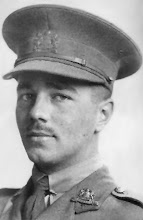
Siegfried Sassoon
Wilfred Owen
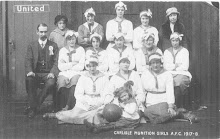
Munitions Girls
Blog Archive
-
▼
2009
(36)
-
▼
September
(16)
- Social traditional barriers eradicated during WW1
- Eradication of Social Barriers in the course of WW1
- Greek Involvement in WW2
- Social traditional barriers eradicated during WW1
- Task Two - For Thursday 27th September
- Homework Task
- Women and Sexuality in Regeneration
- Class and Social Division - By Arusha
- Class and Social Division - By Vincent
- TASK ONE
- English Essay
- Sassoon as representing the conflict between Duty ...
- River as the compassionate father-figure
- Task ONE
- TASK ONE - For Tuesday 8th September
- I have seen and endured the suffering of the troop...
-
▼
September
(16)
IB ENGLISH A1 HIGHER LEVEL AT BIS VIETNAM
Considering the human experience through Love and War.
2 comments:
"Prior, one of the patients at Craiglockhart, is an excellent vessel to allow Barker to expose the class and social division in society during the war."
An excellent analysis, Adam - this is detailed and perceptive and shows a good awareness of the constructs of literature.
You have clearly understood how Barker is controlling the characters in the novel and they all serve to convey her message to the reader, in this case her criticism of the social class system operating at this time (as many of the war poets, including Sassoon and Owen, did in their poetry)
Forgot to say - Write out the question as your title!
Post a Comment