‘To what extent does Barker suggest that traditional social barriers have been expanded or eradicated during the course of WWI?’
Throughout the novel, Barker gives many points suggesting the traditional social barriers have expanded and also eradicated during the course of World War One. She shows these points by writing on topics such as emasculation, the role of Women during the war, their changed attitudes and freedom.
Firstly, she approaches emasculation to suggest the eradication of the traditional social barriers. Soldiers who were traumatized in the war were sent back for treatment and they were emasculated because they didn’t follow the ideals of a man at that time. Men who succumbed to their fear and broke down were seen as cowards and deserters. The ideals of a man were to be brave and restrain the show of emotions or sentiments because they were seen unfit for men. It was exceptionally emasculating to cry and many men who were sent to Craiglockhart War Hospital did cry. They had extremely traumatizing war experiences which were beyond their abilities of restrain. To show fear of anything at all was considered cowardice and men were expected to be unafraid, including horrific war experiences. One example from the book is Anderson, who had developed a phobia of blood from a traumatic war experience. He was a surgeon in the front and there he had treated a French soldier who was covered in mud and couldn’t speak a word of English. The problem was that even after Anderson treated all the visible wounds which weren’t all that visible thanks to the mud, there was a bigger wound covered up by the mud. Hence the soldier hemorrhaged and Anderson had to watch him bleed to death. This particular experience completely emasculated Anderson. He even had an emasculating dream about him being naked then wearing a corset, which only women wore to look more attractive. In the dream, he remembers wearing his uniform, which would represent a man’s pride and then he is naked which show that his pride has been stripped off of him. Here Barker uses symbolization to describe the emasculation of Anderson.
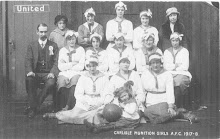
Secondly, Barker uses the role of women, their changed attitudes and their independence to show traditional social barriers disappearing. Women both lost and benefited from the war. They lost their precious husbands and sons but they got much more freedom and independence. All the men were in France but the factories had to keep running and the empty places left by the men had to be replaced by the women. Hence women now had better paying jobs. This also affected them so that they gained masculine traits. There are many examples in the book. Firstly, Prior, a character in the novel finds a group of women sitting in the café. This would not have been a common sight before the war. They were also not of the same age; 3 of them were younger than the other, Lizzie. They were all brought together by the war. They were talking and laughing loudly which was considered unacceptable prior to the war. Even the topic of their conversation was sexual, which would have been a very shameful topic to talk about in public for women prior to the war. The oldest one of the group, Lizzie, is entertaining the other girls with stories of sexual content with usage of vulgar language. This shows that women picked up masculine traits. Their language is also clearly uneducated. They also appear to be a little drunk and display undignified behavior. We also see that Sarah approaches Prior first which was very unlikely and she also “held out her hand to him in a direct, boyish way..” which shows that she is not behaving the way women did before the war. Sarah also “knocked them back” where “them” would refer to the drink she ordered/ this shows us how the women are free to drink alcohol. Here masculine characteristics are displayed again. Also, in the book there is a part which says “They seemed to have changed so much during the war, to have expanded in all kinds of ways, whereas men over the same period had shrunk into a smaller and smaller space.”, where the “They” refers to women. This shows us that while men are losing their confidence, women are gaining it. As the book progresses we can find more points to show the changing attitudes and increasing freedom for women. In the later part, we can find words such as “overalls”, ”cigarette” and ”sweat” which were uncommon among women in the previous to the war. They also use vulgar language frequently with examples such as “arseholes” and “bugger” and they also openly discuss the subject of homosexuality which would be a taboo topic and the way they speak display a lack of respect for men.
Hence, Barker suggests that social barriers had been eradicated during the course of World War One to a large extent and she shows many examples to support it. Throughout the war, women gained more and more masculine traits and also gained confidence while men lost their confidence.
Monday, September 28, 2009

Subscribe to:
Post Comments (Atom)


No comments:
Post a Comment